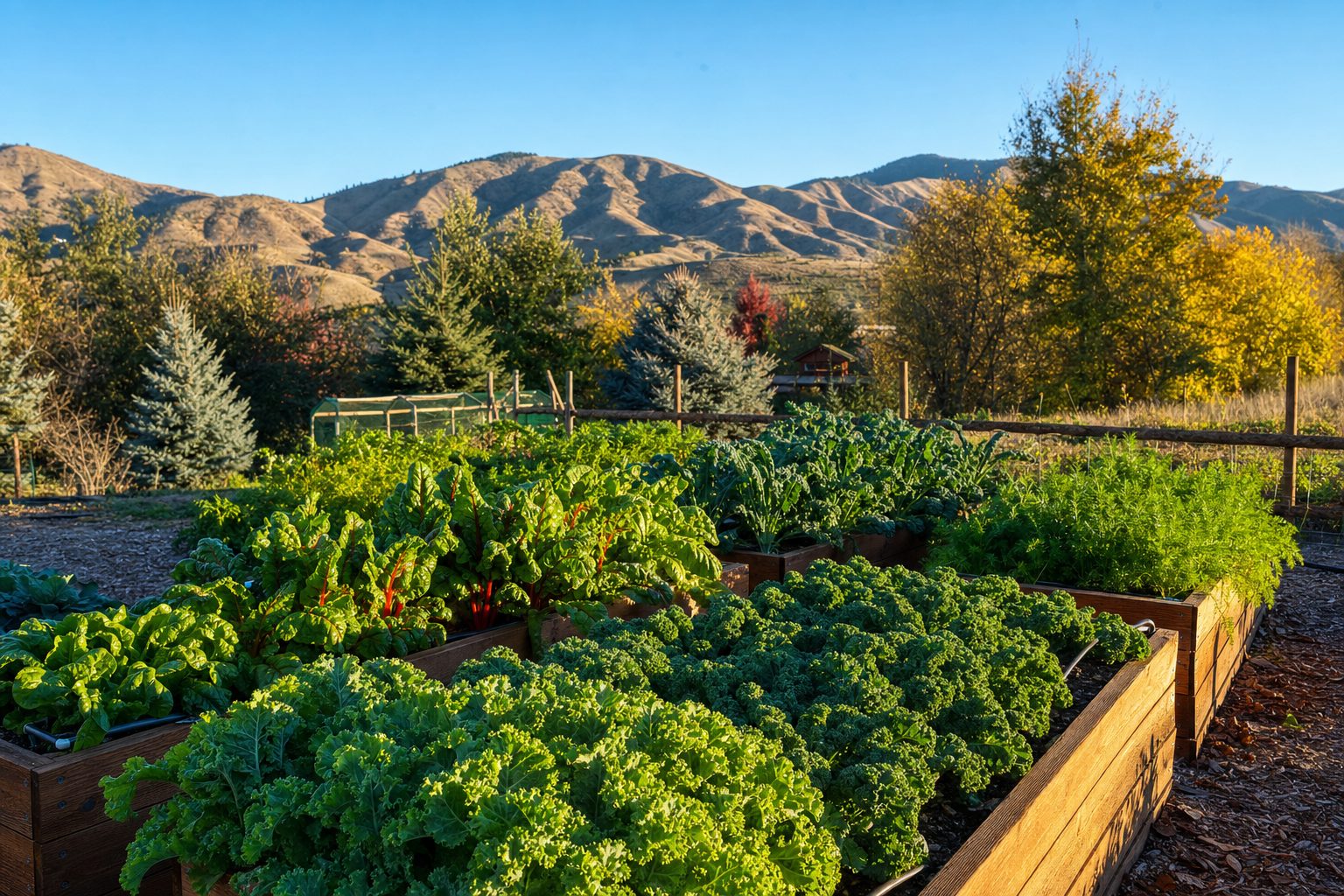
Most Treasure Valley gardeners hang up their trowels in September — just when the best planting window of the year opens. From mid-August through mid-October, the cooling temperatures, reliable irrigation water, and declining pest pressure create ideal conditions for a second harvest that can feed your family through November and beyond.
Why fall is the Treasure Valley's best-kept gardening secret
Spring gardening in the Treasure Valley is a race against short shoulder seasons, late frosts (the last frost in Boise averages May 10), and sudden heat spikes that bolt lettuce and spinach before they size up. Fall is different. The soil is already warm from summer, seeds germinate in days instead of weeks, and temperatures drop gradually — giving cool-season crops weeks of prime growing conditions.
Zone 7a (Boise, Meridian, Eagle, Nampa, Caldwell) means our first killing frost averages October 10–15. That gives a full 60–75 days of growing from a mid-August planting — enough for kale, radishes, arugula, turnips, mustard greens, and lettuce to mature before cold shuts them down. And many of these crops taste better after a light frost: cold triggers sugar production, making kale and Brussels sprouts distinctly sweeter than their summer-grown counterparts.
Key Treasure Valley frost dates: Average first frost — October 10 (Boise), October 8 (Nampa/Caldwell), October 12 (Eagle foothills). Average last frost — May 10. These are 30-year averages from NWS Boise; actual dates vary by 2–3 weeks. Watch forecasts from early October onward and have row cover (Agribon AG-19 or similar) ready.
The fall planting calendar
Timing is everything in fall gardening. Plant too early and heat causes bolting; plant too late and crops don't mature before hard frost. Use this month-by-month schedule, counting backward from the October 10 average first frost.
Mid-August (Aug 10–25)
Direct seed: Carrots ('Napoli', 'Mokum'), beets ('Detroit Golden', 'Chioggia'), radishes ('French Breakfast', 'Watermelon'), turnips ('Hakurei', 'Purple Top'), kohlrabi ('Kolibri', 'Superschmelz'), arugula, mustard greens ('Red Giant', 'Green Wave'), and Swiss chard.
Transplant: Broccoli, cabbage, and cauliflower starts from a nursery or your own July seedlings. Space 18–24 inches apart; they need 60–80 days to head up.
Late August (Aug 25–31)
Direct seed: Leaf lettuce ('Salad Bowl', 'Red Sails', 'Buttercrunch'), spinach ('Bloomsdale', 'Space'), Asian greens (bok choy, tatsoi, mizuna), cilantro, and peas ('Cascadia' snap, 'Wando' shelling). Peas planted now produce through October — shorter vines but sweet pods.
Soil prep: Empty summer beds and prepare them for September planting. Pull spent tomato and cucumber plants, add 1–2 inches of compost, and re-level.
September
Direct seed (first half): Spinach (last chance for full-size harvest before frost), radishes (30-day varieties), lettuce mixes, and arugula. These will mature and hold in the garden through October.
Garlic planting prep: Order seed garlic now. Hardneck varieties ('Music', 'German Extra Hardy', 'Chesnok Red') perform best in the Treasure Valley — they handle our cold winters and produce scapes in June.
Frost protection: Install low tunnels or have row cover ready. Hoops of 9-gauge wire with Agribon AG-19 extend your season by 2–4 weeks.
October
Plant garlic (Oct 1–15): Break bulbs into cloves, plant 2 inches deep and 6 inches apart in rows 12 inches apart. Mulch with 3–4 inches of straw. Garlic roots through winter and emerges in March — harvest in July.
Overwintering: Spinach and garlic planted now will survive our mild winters (down to about 0°F) with a straw or row cover mulch. They'll provide an early spring harvest in March–April.
Final harvest: Bring in remaining peppers, tomatoes, and squash before the first hard frost. Green tomatoes ripen indoors if picked before frost.
Best crops for Treasure Valley fall gardens
Not all vegetables thrive in fall. Focus on cool-season crops that tolerate frost and actually improve with cold. Here is what works reliably in the Treasure Valley, with specific varieties proven in our climate.
| Crop | Varieties for Treasure Valley | Days to maturity | Frost tolerance |
|---|---|---|---|
| Kale | 'Lacinato' (dinosaur), 'Winterbor', 'Red Russian' | 55–65 | Hardy to 10°F; sweetens after frost |
| Spinach | 'Bloomsdale', 'Space', 'Winter Bloomsdale' | 40–45 | Hardy to 15°F; overwinters with mulch |
| Lettuce (leaf) | 'Salad Bowl', 'Red Sails', 'Winter Density' | 45–55 | Light frost OK; protect below 28°F |
| Arugula | 'Astro', 'Wild Rocket' | 30–40 | Hardy to 20°F; best fall green |
| Radishes | 'French Breakfast', 'Watermelon', 'Daikon' | 25–35 | Light frost OK; fastest fall crop |
| Carrots | 'Napoli', 'Mokum', 'Bolero' | 60–75 | Hardy to 15°F; sweetens in cold |
| Beets | 'Detroit Golden', 'Chioggia', 'Bull's Blood' | 50–60 | Hardy to 20°F; greens also edible |
| Swiss chard | 'Bright Lights', 'Fordhook Giant' | 50–60 | Hardy to 20°F; productive all fall |
| Bok choy | 'Joi Choi', 'Toy Choi' | 40–50 | Light frost OK; harvest before hard frost |
| Turnips | 'Hakurei' (salad turnip), 'Purple Top White Globe' | 35–50 | Hardy to 20°F; Hakurei is exceptional |
| Garlic (fall-planted) | 'Music', 'German Extra Hardy', 'Chesnok Red' (hardneck) | Harvest July (overwinter) | Hardy to −10°F with mulch |
| Peas (snap/shelling) | 'Cascadia', 'Wando', 'Sugar Ann' | 55–65 | Light frost OK; shorter fall vines |
Preparing your beds for fall planting
Treasure Valley soils range from sandy loam in Nampa and Caldwell to heavier clay in parts of Meridian and Boise's Bench. All benefit from amendment before fall planting. Your summer crops depleted nitrogen and organic matter — replenish before seeding.
Step-by-step soil refresh
- Clear the bed. Pull spent summer plants (tomatoes, cucumbers, beans). Compost healthy plants; bag and trash any with disease (early blight, fusarium wilt) to prevent soil contamination.
- Add compost. Spread 1–2 inches of finished compost over the bed. Zamzows sells a locally produced compost blend; Edwards Greenhouse carries organic options. Work it into the top 4–6 inches with a digging fork.
- Check pH. Treasure Valley soils tend toward alkaline (pH 7.5–8.2). Most vegetables prefer 6.0–7.0. If your pH is above 7.5, add elemental sulfur (1–2 lbs per 100 sq ft) or use an acidifying fertilizer. Test kits are available at Zamzows or the Ada Soil & Water Conservation District.
- Add a light fertilizer. A balanced organic fertilizer (5-5-5) at 2–3 lbs per 100 sq ft gives fall crops a steady nutrient supply without the nitrogen spike that causes bolting. Avoid high-nitrogen synthetic fertilizers for fall greens.
- Rake smooth and water. Level the surface, water deeply, and wait 2–3 days before seeding so the soil settles.
For a deep dive on Treasure Valley soil types, pH correction, and amendment rates, see our soil amendment guide.
Raised beds vs. in-ground planting
Raised beds excel for fall gardening in the Treasure Valley. They drain better (critical when September irrigation water is still flowing), warm faster for August germination, and are easier to cover with row cover or low tunnels. A 4×8 foot cedar raised bed (10 inches deep) costs $120–200 in materials and grows enough salad greens for a family of four through November.
In-ground beds work fine for larger crops like carrots, beets, and garlic — just ensure drainage is adequate. If you have heavy clay (common in Meridian's newer subdivisions), amend generously with compost and consider building raised beds instead.
Water-wise tip: Fall crops need less water than summer tomatoes — about 1 inch per week instead of 2. If your subdivision has pressurized irrigation (common in Nampa, Caldwell, and Kuna), you can reduce zones to every other day as temperatures drop in September. Drip irrigation on a timer is ideal for raised beds. See our irrigation guide for Treasure Valley-specific watering schedules.
Extending the season: row covers and cold frames
A simple row cover extends your fall harvest by 3–4 weeks — sometimes into December. You don't need a greenhouse; low tunnels are inexpensive and effective.
Low tunnel construction
- Hoops: Cut 9-gauge wire or ½-inch PVC pipe into 6-foot lengths. Insert every 3–4 feet along the bed, arching to about 18 inches high.
- Cover: Drape Agribon AG-19 (or AG-15 for lighter frost) over the hoops. This fabric lets light and water through while trapping 2–4°F of warmth.
- Secure: Clip the fabric to the hoops with snap clamps, and weigh down the edges with boards or soil. Don't use staples — you need to open the tunnel on warm days to vent.
- Vent on warm days: When daytime temps exceed 60°F, open the ends or lift the sides. Closed tunnels can overheat in October's sunny afternoons.
A cold frame (a low box with a transparent lid) offers even more protection and is perfect for overwintering spinach and lettuce. A simple cold frame built from straw bales and an old window costs under $40 and can keep greens alive through December in the Treasure Valley's relatively mild winters.
Overwintering crops for spring harvest
One of the most rewarding strategies in a Treasure Valley garden is overwintering — planting in fall so crops survive winter and provide an early spring harvest weeks before you could plant anything new.
- Garlic: Plant in October, harvest in July. The single most reliable overwintering crop for the Treasure Valley.
- Spinach: Plant in late September–early October. Plants stay small through winter under row cover, then explode in February–March for harvest in April.
- Garlic scapes: Hardneck garlic sends up curly scapes in June — a bonus harvest before the bulbs are ready.
- Multiplier onions (potato onions): Plant in October for early green onions in March.
Pests and problems in fall gardens
Fall gardens face far fewer pest problems than spring and summer ones — one of the main advantages. But a few issues still arise:
- Aphids: Can appear in September's warm weather, especially on brassicas (broccoli, kale, cabbage). Blast off with a strong water spray or apply insecticidal soap. They naturally decline as temperatures drop below 50°F.
- Cabbage white butterfly: Still active in September. Cover brassicas with row cover (Agribon AG-15) immediately after transplanting to prevent egg-laying. Remove cover in October when adults are no longer active.
- Cutworms: Young seedlings are vulnerable. Place cardboard collars (toilet paper rolls cut to 3 inches) around transplants, or scatter crushed eggshells around direct-seeded rows.
- Deer: In Boise Foothills and Eagle neighborhoods, deer can devastate a fall garden in one night. A 7-foot fence or deer netting is the only reliable protection. See our deer-resistant plants guide for more strategies.
- Hail: Late summer thunderstorms can shred tender seedlings. Keep row cover handy to deploy quickly when storms are forecast.
Where to buy seeds, starts, and supplies in the Treasure Valley
- Edwards Greenhouse (3100 W State St, Boise): The best local source for fall vegetable starts (kale, broccoli, cabbage, lettuce) in August and September. Also carries organic seeds, compost, row cover (Agribon), and season extension supplies. Staff are knowledgeable about Treasure Valley planting dates.
- Zamzows (Boise, Eagle, Meridian, Nampa, Caldwell): Locally owned. Carries soil amendments, organic fertilizers, seed starting supplies, and seasonal vegetable starts. Excellent compost and soil blends formulated for Treasure Valley conditions.
- Home Depot & Lowe's (multiple Treasure Valley locations): Carry bulk potting soil, raised bed kits, drip irrigation components, and basic seed selections. Better for hardware and supplies than specialized seeds.
- Boise Co-op (Boise & Meridian): Organic and heirloom seeds from regional companies (High Mowing, Botanical Interests). Limited but curated fall selection.
- Online seed companies: For varieties not available locally, order from High Mowing Organic Seeds (Vermont, excellent cold-season varieties), West Coast Seeds (British Columbia, great for Pacific Northwest conditions similar to ours), and Terrafirma Organics (Idaho-based, regional adaptation).
- Farmers' markets: The Boise Farmers Market (Saturday mornings, April–December) and Capital City Public Market sometimes have local growers selling fall starts in August and September. These are often varieties proven to work in our climate.
Costs and budget
A fall vegetable garden is one of the most cost-effective landscaping investments you can make. Here's what to budget:
- Seeds: $3–5 per packet. A fall garden of 6 crops: $18–30.
- Transplants (broccoli, cabbage, kale starts): $3–5 per plant from Edwards Greenhouse or Zamzows. Six plants: $18–30.
- Compost (for bed refresh): $6–12 per bag, or $30–60 per cubic yard bulk. One bag covers a 4×8 raised bed.
- Row cover (Agribon AG-19, 50 ft roll): $25–35. Enough for 3–4 raised beds.
- Wire hoops (9-gauge, pack of 10): $12–18.
- Garlic seed (3 bulbs, ~30 cloves): $15–25. Plants a 2×4 foot bed.
- Raised bed kit (4×8 cedar): $120–200, or build your own from 2×10 lumber for $60–90.
Total for a first-year fall garden in two raised beds: $200–350, including the beds. Subsequent years cost $50–80 (seeds, compost, replacement row cover). Compare this to a single season of CSA vegetables ($400–600) and the economics are compelling.
A simple fall garden plan
If you're starting your first fall garden, keep it simple. Two 4×8 raised beds will feed a family of four through November:
Bed 1 (planted August 10–20):
- One half: carrots ('Napoli') — mature in 65 days, harvest October through November
- One quarter: radishes ('French Breakfast') — sow every 2 weeks for continuous harvest
- One quarter: kale ('Lacinato') transplants — harvest leaves October through November
Bed 2 (planted August 25–September 5):
- One half: lettuce mix ('Salad Bowl' + 'Red Sails') — cut-and-come-again harvest through October
- One quarter: spinach ('Bloomsdale') — harvest November; overwinter with row cover for spring
- One quarter: arugula — fastest, easiest fall green; ready in 30 days
October addition: Plant garlic in any empty space or a third bed. It overwinters and harvests in July — just in time to replant the bed with summer crops.
Succession planting tip: Sow radishes and arugula every 10–14 days from August 10 through September 15. Each sowing matures in 25–35 days, giving you a continuous harvest rather than one big glut. Mark sowing dates on plant labels so you know which row is ready next.
What to do with your harvest
Fall vegetables store exceptionally well. Carrots and beets keep for months in a cool garage or basement (35–40°F, high humidity) packed in damp sand or sawdust. Kale, chard, and lettuce can be blanched and frozen. Spinach and arugula are best eaten fresh but will keep for a week in the refrigerator in a sealed bag with a paper towel.
For long-term storage without refrigeration, consider a root cellar-style setup in a cool, dark corner of your garage. Treasure Valley garages typically stay above freezing through most of the winter, making them ideal for storing carrots, beets, turnips, and winter squash well into January.
Connecting fall gardening to your landscape
A fall vegetable garden doesn't have to be a separate utilitarian space. Edible landscaping integrates vegetables into your overall yard design. Kale and Swiss chard are genuinely ornamental — 'Bright Lights' chard with its red, yellow, and pink stems looks stunning in a front yard bed. Lettuce makes an attractive border edging. Garlic planted in October is a structural element through winter and spring, with curly scapes in June.
If you're planning a landscape renovation, consider dedicating a section to raised vegetable beds with good sun exposure (south or southeast facing, 6+ hours of direct sun). Position them near a water source and within easy view of your kitchen — you'll harvest more often if you see the garden every day. For more on integrating productive plants into your yard design, see our front yard landscaping guide.