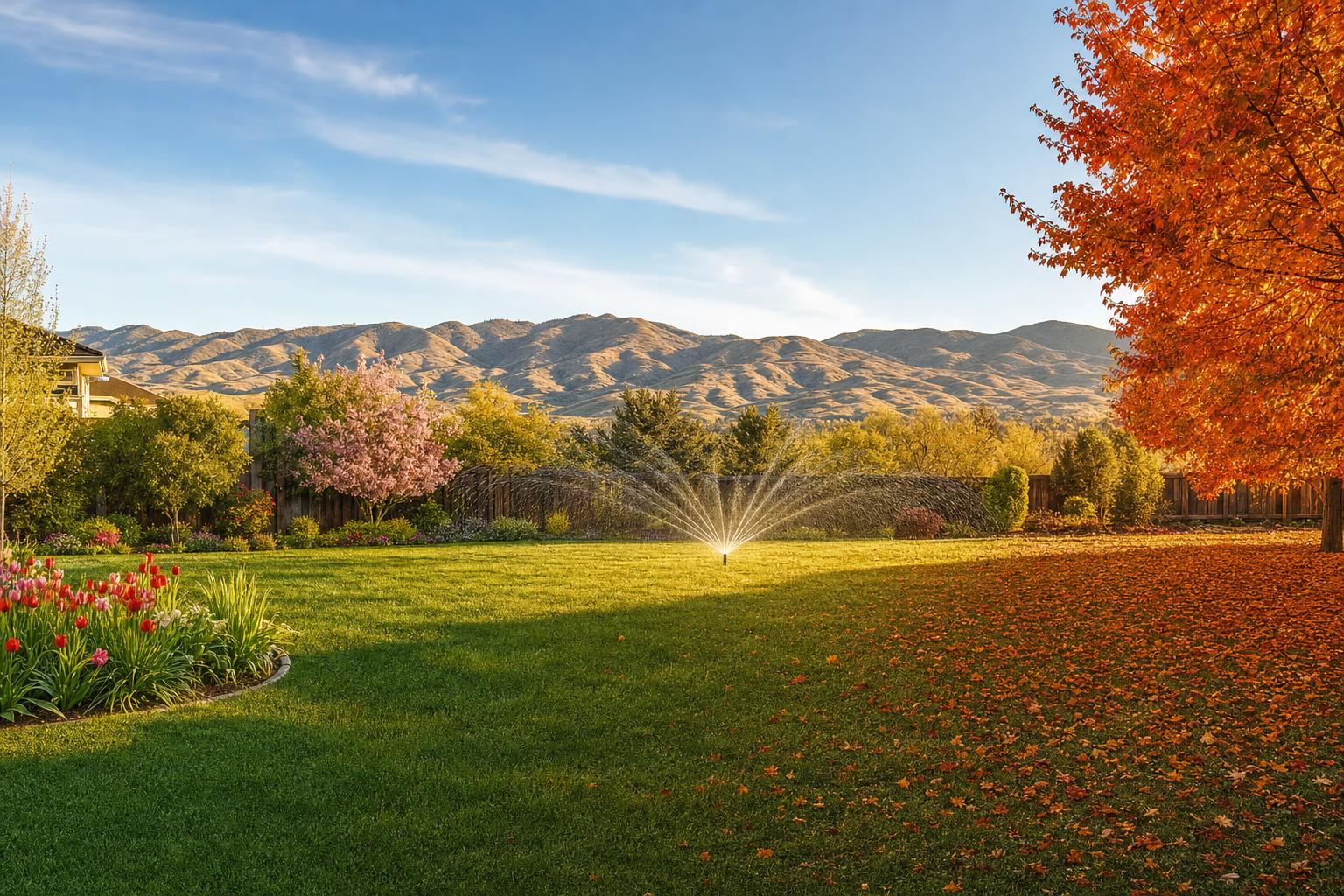
Treasure Valley yards move through distinct seasons: spring startup, summer heat management, fall cleanup, and winter protection. A good maintenance plan helps you avoid panic work and keeps the landscape healthy with smaller, better-timed tasks. Here is a month-by-month calendar tuned to our high-desert climate.
Our growing season typically runs from mid-April to mid-October — about 150–170 frost-free days. Last frost averages around May 5–10; first frost arrives around October 10–15. Most precipitation falls between November and May, making irrigation essential from June through September. Summer highs regularly exceed 95°F, while winter inversions can trap cold air and fog in the valley for days.
Spring: Waking up the yard
March
- Rake remaining leaves and dead growth from beds and lawn edges
- Inspect irrigation system for winter damage (don't turn on yet)
- Prune fruit trees and deciduous shrubs while dormant
- Apply dormant oil to ornamental trees and shrubs to control overwintering insects
- Start seeds indoors for warm-season vegetables and annuals
April
- Turn on and test irrigation system — check for leaks, broken heads, coverage
- Core aerate the lawn (soil should be moist but not soggy)
- Apply pre-emergent herbicide for crabgrass control
- First fertilizer application for cool-season lawns (Kentucky Bluegrass, fescue)
- Plant cool-season crops: peas, lettuce, spinach, kale
- Clean and refresh mulch in planting beds (add 1–2 inches)
May
- Plant warm-season vegetables after last frost (~May 10): tomatoes, peppers, squash
- Plant new trees, shrubs, and perennials — ideal planting window
- Begin regular mowing — set blade to 3 inches for cool-season grasses
- Install or check drip irrigation lines in planting beds
- Watch for aphids on new growth — spray with water or insecticidal soap
- Divide fall-blooming perennials if needed
Summer: Thriving in the heat
June
- Increase irrigation to 1–1.5 inches per week, applied in 2–3 deep sessions
- Water early morning (before 8 AM) to minimize evaporation
- Adjust smart controller for summer heat — increase run times
- Mow high (3–3.5 inches) — taller grass shades soil and retains moisture
- Apply mulch around vegetable plants to retain moisture
- Check for billbugs — brown patches that don't respond to watering may indicate pests
July
- Peak heat — monitor irrigation closely, check soil moisture with finger test
- Deep-water trees and shrubs once every 1–2 weeks (not daily)
- Weed regularly — pull when small, before they go to seed
- Watch for spider mites on hot, dry days — look for stippled or yellowing leaves
- Deadhead flowering perennials to encourage continued bloom
- Protect young trees from sunscald with trunk wrap or temporary shade
August
- Continue deep, infrequent watering — avoid daily shallow sprinkling
- Check for grub damage — pull on brown patches; if grass peels back like carpet, treat for grubs
- Harvest vegetables regularly to keep plants producing
- Light pruning of summer-flowering shrubs after bloom
- Plan fall projects — order materials, schedule contractors before September rush
- Avoid heavy fertilization — heat-stressed lawns can't use it effectively
Fall: Preparing for winter
September
- Core aerate the lawn — the best time for aeration in the Treasure Valley
- Overseed thin lawns with cool-season grass seed
- Apply fall fertilizer (higher potassium) — the most important feeding of the year
- Plant new trees and shrubs — roots establish well in cooler soil
- Divide spring-blooming perennials (iris, peony, daylily)
- Start reducing irrigation frequency as temperatures cool
October
- Schedule sprinkler blowout before first hard freeze (mid-to-late October)
- Final mow — cut slightly shorter than summer (2.5 inches)
- Clean up fallen leaves — compost or use as mulch in beds
- Plant spring-blooming bulbs: tulips, daffodils, alliums (before ground freezes)
- Apply final mulch layer around plants for winter root protection
- Wrap young tree trunks to protect from sunscald and animal damage
November
- Winterize irrigation system — ensure blowout is complete
- Disconnect and drain rain barrels, store upside down
- Clean and store garden tools — sharpen blades, oil metal parts
- Mark pathways and bed edges with stakes for snow removal reference
- Last chance to plant bulbs before ground freezes solid
- Drain and store hoses, bring tender containers indoors
Winter: Dormant season care
December–January
- Minimize foot traffic on frozen or soggy lawns — prevents crown damage
- Brush heavy snow off shrubs and evergreens to prevent branch breakage
- Plan next year's projects — browse catalogs, order seeds, sketch designs
- Review drainage patterns during winter storms — note pooling or runoff issues
- Prune deciduous trees while fully dormant (January is ideal)
- Watch for inversion fog — avoid unnecessary traffic on lawns when fog persists
February
- Continue dormant pruning of trees and shrubs
- Check for winter damage — broken branches, frost heave, animal browsing
- Order seeds, bare-root plants, and supplies for spring
- Start onion, leek, and cold-tolerant seedlings indoors
- Sharpen and tune up mower, pruners, and other tools
- Plan irrigation upgrades — retrofit spray heads with MP rotators or add drip zones
Quick reference: Treasure Valley climate facts
| Metric | Value | What it means for your yard |
|---|---|---|
| USDA Hardiness Zone | 6b–7a | Choose plants rated to Zone 6 or colder (−5°F to 0°F winter lows) |
| Annual precipitation | ~11 inches | Irrigation is essential from June–September; natives can survive on rainfall after establishment |
| Elevation | 2,500–2,870 ft | UV intensity is high; sun-loving plants thrive but young plants need protection |
| Last frost | ~May 5–10 | Don't plant warm-season crops before this date |
| First frost | ~October 10–15 | Plan winterization (sprinkler blowout, mulch) by mid-October |
| Summer water need | 1–1.5 inches/week | Apply in 2–3 deep sessions, not daily. Water before 8 AM. |
| Soil pH | 7.5–8.5 (alkaline) | Compost improves nutrient availability; sulfur helps acid-loving plants |
| Record high / low | 111°F / −25°F | Choose plants with wide temperature tolerance |
Billbug alert: Billbugs are the most destructive lawn pest in the Treasure Valley. Damage looks like drought — irregular brown patches that don't respond to watering. If you can pull on the brown grass and it peels back like carpet with no roots attached, you have billbugs or grubs. Apply preventative grub control in early summer before damage appears.
The payoff of timing
The biggest mistake Treasure Valley homeowners make is reactive maintenance — watering too late, fertilizing at the wrong time, or winterizing after the first freeze. By following this calendar, you stay ahead of the curve: your lawn greens up earlier in spring, survives summer with less water, enters winter stronger, and costs less to maintain year-round.
Even a few well-timed tasks — a spring pre-emergent, a fall winterizer fertilizer, and an October sprinkler blowout — make a visible difference. Start with those three, then layer in more as you get comfortable with the rhythm.
Watch & Learn: Seasonal Gardening for the Intermountain West
These videos cover seasonal gardening strategies that work for Treasure Valley’s high-desert climate — from planning your gardening year to transitioning beds between seasons.
Gardening With the Seasons & Climate
A practical guide to working with your local climate and seasonal patterns rather than fighting them — covering how to use regional gardening resources, frost dates, and seasonal timing to plan your year.
Pacific Northwest GardenerTransitioning Your Garden from Summer to Fall
A complete tutorial on refreshing garden beds for the fall season — clearing spent summer plants, amending soil, and preparing for the cooler months ahead. Relevant for Treasure Valley’s September–October transition.
Epic Gardening