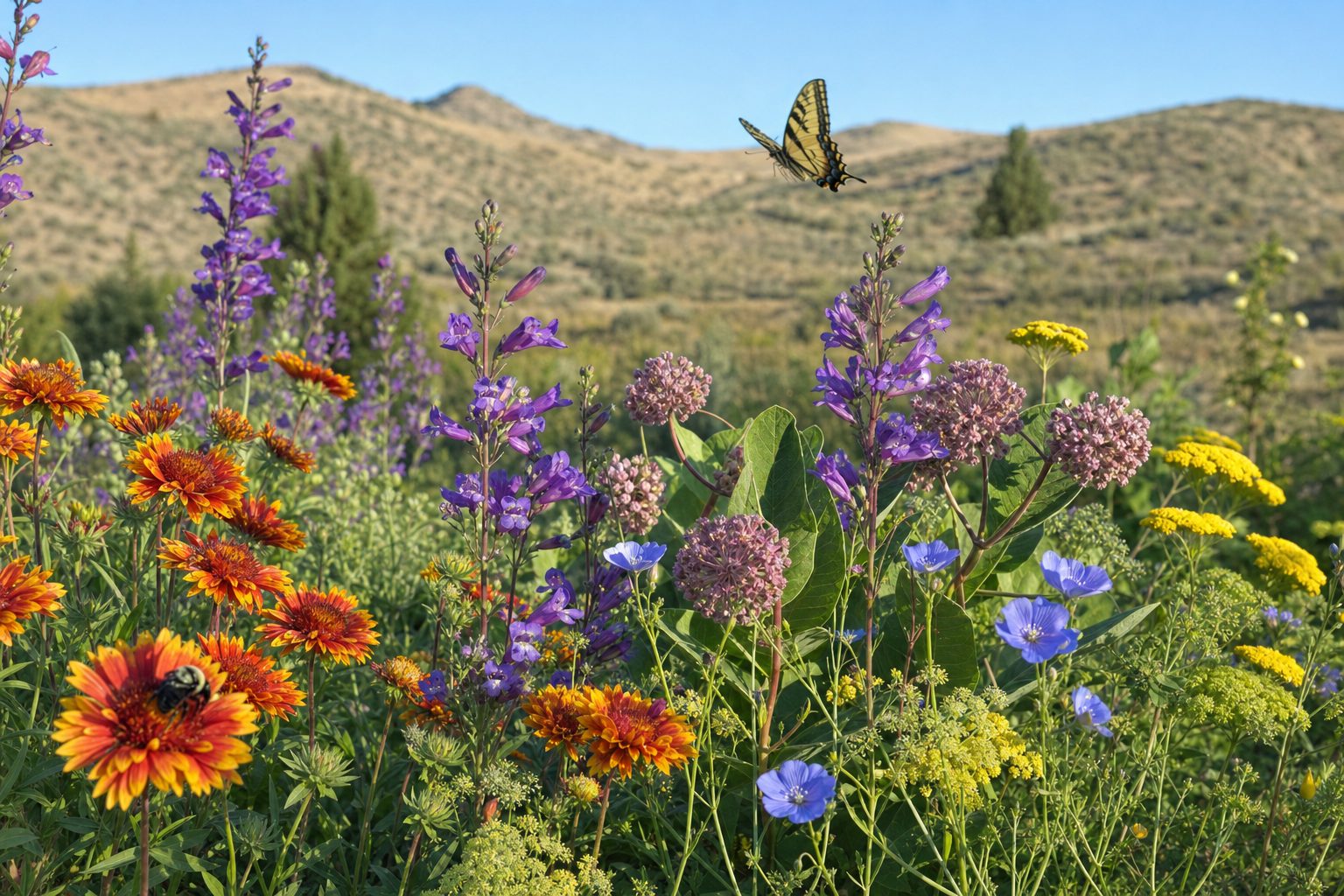
Pollinator Garden Design Guide for the Treasure Valley
A pollinator garden is one of the most rewarding landscapes you can build in the Treasure Valley — it blooms for months, needs less water than a lawn, and supports the native bees, butterflies, and hummingbirds that keep our local ecosystems and agriculture healthy. Here is how to design one that thrives in our high-desert climate.
Why Pollinator Gardens Matter Here
The Treasure Valley sits in a semi-arid high-desert climate zone, and as Boise, Meridian, Nampa, and surrounding communities continue to grow rapidly, natural pollinator habitat is shrinking. The open sagebrush steppe and riparian corridors that once supported diverse native bee populations are being replaced by rooftops, pavement, and lawns. A thoughtfully planted pollinator garden — even a small one — helps bridge the gap.
Boise is home to the Treasure Valley Pollinator Project, a community-wide effort led by the Ada Soil & Water Conservation District to increase pollinator habitat in residential backyards. The Idaho Botanical Garden maintains active pollinator demonstration gardens, and the City of Boise runs a Bee Watch citizen-science program to document native pollinator diversity in southwest Idaho. Our region takes pollinator conservation seriously — and your garden can be part of the effort.
Did you know? Idaho is home to over 400 species of native bees, including mason bees, leafcutter bees, sweat bees, digger bees, and bumble bees. The USGS published a Identification of Bees in Southwest Idaho guide documenting the remarkable diversity in our area. Most of these bees are solitary, gentle, and far more efficient pollinators than honey bees — but they need the right plants and habitat to thrive.
Understanding Treasure Valley Pollinators
Before choosing plants, it helps to know who you are gardening for. The Treasure Valley's pollinator community falls into several key groups:
Native Bees
Idaho's native bees are overwhelmingly solitary — they don't live in hives or make honey, but they are extraordinarily effective pollinators. Mason bees (Osmia spp.) are active in early spring and are among the first pollinators to emerge, making them critical for early-blooming fruit trees. Leafcutter bees (Megachile spp.) are active through summer, cutting neat circles from leaves to line their nests. Sweat bees (family Halictidae) are small, often metallic-green, and visit a wide range of flowers. Bumble bees (Bombus spp.) are social and one of the few pollinators active in cool weather, making them important for early-spring and late-fall flowers.
Butterflies
The Treasure Valley hosts a variety of butterflies, including Western swallowtails, Cabbage whites, Monarchs, and numerous smaller species. Monarch butterflies (Danaus plexippus) are of particular conservation concern — their populations have declined dramatically across North America. Monarchs lay their eggs exclusively on milkweed species, and showy milkweed (Asclepias speciosa) is the native milkweed of the Treasure Valley. A 2019 study published in Frontiers in Ecology and Evolution documented milkweeds and breeding monarchs across Idaho, confirming that our region plays a role in the monarch's western migration.
Hummingbirds
The Black-chinned Hummingbird (Archilochus alexandri) is the most common nesting hummingbird in the Treasure Valley, arriving in May and departing by late August. Rufous Hummingbirds (Selasphorus rufus) pass through during migration. Hummingbirds are attracted to tubular flowers in red, orange, and pink — penstemon is one of their favorites.
Moths and Other Pollinators
Sphinx moths (also called hawk moths) are important nocturnal pollinators that visit evening-blooming flowers. Beetles, flies (especially hover flies), and wasps also contribute to pollination, though they are less visible and often underappreciated.
Design Principles for a Successful Pollinator Garden
1. Plant in Drifts, Not Singles
Pollinators forage more efficiently when plants are grouped in clusters of 3–5 or more of the same species. A single penstemon tucked among unrelated flowers is harder for a bee to find than a drift of five penstemons along a path. Mass planting also creates stronger visual impact in your landscape.
2. Plan for Bloom Succession
The most common mistake in pollinator gardens is having everything bloom at once — usually mid-summer — and nothing the rest of the year. Pollinators need nectar and pollen from early spring through late fall. The key is selecting plants with staggered bloom times so something is always in flower. A simple approach: choose at least 3 species that bloom in each of the three growing seasons:
| Season | Bloom Window | Pollinator Priority |
|---|---|---|
| Spring | April – May | Critical for emerging mason bees and bumble bee queens |
| Summer | June – August | Peak foraging for most bees, butterflies, and hummingbirds |
| Fall | September – October | Essential for migrating monarchs and late-active bumble bees |
3. Layer Vertically
Pollinators use different vertical strata. Plant a mix of low groundcovers, mid-height perennials, and taller background plants. Hummingbirds often feed at shoulder height or above, while many native bees prefer flowers at knee-to-waist height. A layered planting also looks more natural and visually dynamic.
4. Prioritize Native Plants
Research consistently shows that native pollinators prefer native plants. Native plants have co-evolved with local bees and butterflies over thousands of years, and their flower structures are suited to local pollinator anatomy. Non-native ornamentals can supplement a pollinator garden, but native species should form the backbone. Most Treasure Valley natives are also drought-tolerant and cold-hardy to zone 5 or below, making them low-maintenance once established.
5. Provide Water and Habitat
Nectar plants alone are not enough. Pollinators also need water, nesting sites, and shelter. A shallow dish with pebbles and a small amount of water gives bees a safe drinking spot. Leave some bare ground (uncleared of vegetation and not mulched) for ground-nesting bees, which make up about 70% of our native bee species. A block of wood with drilled holes, or a purchased mason bee house, provides nesting habitat for cavity-nesting bees. Leave plant stems standing through winter — many native bees overwinter inside hollow stems.
Recommended Pollinator Plants for the Treasure Valley
The following plants are selected from the Idaho Botanical Garden's recommended pollinator plant list for Boise, the BLM's Native Garden Guide for Southwestern Idaho, and the Xerces Society's Rocky Mountain pollinator plant resources. All are suitable for the Treasure Valley's zone 5–6 climate, alkaline soils, and low-rainfall conditions.
Spring Bloomers (April – May)
| Common Name | Scientific Name | Attracts | Bloom Time | Notes |
|---|---|---|---|---|
| Blue Flax | Linum lewisii | Bees | April – June | Sky-blue flowers, drought-tolerant, self-seeds readily |
| Rocky Mountain Penstemon | Penstemon strictus | Bees, hummingbirds | May – July | Tall purple spikes, part of Idaho Botanical Garden's Western Penstemon Collection |
| Bitterroot | Lewisia rediviva | Solitary bees | April – May | Idaho state flower, pink-white blooms, needs excellent drainage |
| Arrowleaf Balsamroot | Balsamorhiza sagittata | Bees, butterflies | April – June | Iconic foothills sunflower, deep taproot, very drought-tolerant |
| Wax Currant | Ribes cereum | Bees, hummingbirds | April – June | Native shrub, pink-white tubular flowers, followed by edible berries |
Summer Bloomers (June – August)
| Common Name | Scientific Name | Attracts | Bloom Time | Notes |
|---|---|---|---|---|
| Showy Milkweed | Asclepias speciosa | Monarchs, bees | June – August | The native milkweed for the Treasure Valley — essential monarch host plant |
| Blanket Flower | Gaillardia aristata | Bees, butterflies | June – October | Vibrant orange-red daisy flowers, exceptionally long bloom, drought-tolerant |
| Sulfur Buckwheat | Eriogonum umbellatum | Bees, butterflies | June – August | Yellow umbel flowers, excellent for rocky terrain, important native bee plant |
| Common Yarrow | Achillea millefolium | Bees, butterflies | June – September | Flat white or pink flower clusters, spreads easily, great filler plant |
| Fireweed | Chamaenerion angustifolium | Bees, hummingbirds | July – September | Tall pink spikes, attracts diverse pollinators, can spread aggressively |
| Globe Mallow | Sphaeralcea munroana | Bees | June – August | Orange hibiscus-like flowers, very drought-tolerant, silvery foliage |
| Scarlet Gilia | Ipomopsis aggregata | Hummingbirds | June – August | Brilliant red tubular flowers, hummingbird magnet, biennial |
Fall Bloomers (September – October)
| Common Name | Scientific Name | Attracts | Bloom Time | Notes |
|---|---|---|---|---|
| Aromatic Aster | Symphyotrichum oblongifolium | Bees, butterflies | September – October | Late-season purple daisies, critical for migrating monarchs |
| Stiff Goldenrod | Solidago rigida | Bees, butterflies | August – October | Flat-topped yellow flowers, supports late-season pollinators |
| Rubber Rabbitbrush | Ericameria nauseosa | Bees, butterflies | September – October | Native shrub with golden yellow fall blooms, very drought-tolerant |
| Maximilian Sunflower | Helianthus maximiliani | Bees, butterflies | August – October | Tall perennial sunflower, late-season nectar source |
Designing Your Garden Layout
Site Selection
Choose a spot that receives at least 6 hours of direct sunlight — most Treasure Valley pollinator plants are sun-lovers. South- or west-facing locations are ideal. If you have a partially shaded area, don't rule it out — plants like blue flax and wax currant tolerate some shade, and the filtered light can benefit pollinators during the hottest part of our summer afternoons.
Edges and transitions are excellent locations: along fence lines, beside walkways, or where your yard meets a natural area. These zones create pollinator corridors that connect habitat patches across the neighborhood.
Soil Preparation
Treasure Valley soils are typically alkaline (pH 7.5–8.5), often sandy or silty loam, and may be compacted from construction. Most native pollinator plants actually prefer lean, well-drained soil — do not over-amend with rich compost. For heavy clay soils (common in some Nampa and Caldwell areas), add coarse sand or fine gravel to improve drainage. A light layer of compost (1–2 inches) mixed into the top 6 inches is sufficient for most sites.
Don't over-fertilize. Native Idaho plants are adapted to nutrient-poor soils. Excess nitrogen produces lush, weak growth that is more susceptible to pests and winter damage, and actually reduces nectar production in some species. Skip the fertilizer entirely for established native plants — they don't need it.
A Sample 100-Square-Foot Pollinator Border
For a 10 ft × 10 ft sunny border along a fence or path, here is a proven plant combination that provides continuous bloom from April through October:
Back row (taller, 24–36 inches): 3 Showy Milkweed, 3 Rocky Mountain Penstemon, 2 Maximilian Sunflower
Middle row (12–24 inches): 5 Blanket Flower, 3 Sulfur Buckwheat, 3 Globe Mallow, 2 Common Yarrow
Front row (under 12 inches): 5 Blue Flax, 3 Aromatic Aster (spreading habit fills front edge)
This combination gives you 29 plants in 100 square feet — roughly $150–$250 in plant costs if purchasing 4-inch pots from a local native plant nursery. Space plants 12–18 inches apart in the front and middle rows, 18–24 inches in the back row. Water deeply once per week for the first growing season; after establishment, most of these plants will need supplemental water only during the hottest weeks of July and August.
Habitat Features Beyond Plants
Bee Houses and Nesting Habitat
About 30% of native bees nest in cavities — hollow stems, beetle burrows in wood, or holes in masonry. You can provide nesting habitat by installing a mason bee house (available from local garden centers or online), or by leaving dead flower stalks standing through winter. For ground-nesting bees (the other 70%), leave a patch of bare, undisturbed soil in a sunny spot — even a 2-foot square area is valuable. Avoid landscape fabric in pollinator areas, as it prevents ground-nesting bees from accessing soil.
Water Sources
Pollinators need water, but a deep birdbath can drown bees. Instead, set out a shallow dish or saucer filled with pebbles or marbles, add just enough water to reach the top of the pebbles without covering them, and place it in a sunny spot near your pollinator plants. Refresh the water every few days. Butterflies particularly appreciate muddy puddles (a phenomenon called "puddling") where they absorb minerals — a small damp patch of bare soil near the garden serves this purpose.
Overwintering Habitat
This is the most overlooked element of pollinator gardening. Many native bees spend the winter as larvae inside plant stems or in the soil. Bumble bee queens hibernate in undisturbed ground or under leaf litter. The temptation to "clean up" the garden in fall is strong, but leaving seed heads, dried stalks, and fallen leaves in place through winter provides critical overwintering habitat. Cut back dead stems in March, not November — and leave 12–15 inches of stubble standing, as many bee larvae are tucked inside the lower portions of the stems.
Leave the leaves. The Ada Soil & Water Conservation District explicitly recommends leaving fall leaves in garden beds rather than bagging them. Leaf litter shelters overwintering bumble bee queens, moth cocoons, and beneficial insects. If a tidy look matters to you, rake leaves into a back corner of the yard rather than disposing of them.
What to Avoid
Pesticides and Herbicides
This is the single most important rule: do not use pesticides in or near your pollinator garden. Even "organic" pesticides like neem oil and insecticidal soap can harm native bees — they are broad-spectrum killers that don't distinguish between pest and pollinator. If pest problems arise, use integrated pest management (IPM): hand-pick pests, spray aphids off with water, and rely on the beneficial insects your pollinator garden will attract to keep pest populations in check. The Idaho Botanical Garden uses IPM exclusively in its pollinator gardens as a model for home gardeners.
Herbicides should also be avoided. Beyond the direct risk to pollinators, herbicides eliminate the "weed" species that many native bees rely on — dandelions, for instance, are one of the earliest nectar sources in spring. A pollinator garden embraces a wider definition of what counts as a desirable plant.
Cultivars with Doubled Flowers
Many nursery cultivars have been bred for showy, double-petaled flowers that look dramatic but produce little or no nectar and pollen — the reproductive parts have been replaced with extra petals. When buying pollinator plants, choose straight species or single-flowered cultivars. A good rule of thumb: if you can see the flower's center (stamens and pistil), pollinators can access it. If it's a dense pom-pom of petals, skip it.
Invasive Species
Some popular pollinator plants are aggressive spreaders in the Treasure Valley and should be avoided or contained. Butterfly bush (Buddleja davidii) is a magnet for butterflies but is listed as a noxious weed in several western states and can escape into riparian areas. If you plant it, choose sterile cultivars like 'Lo & Behold' or 'Miss Molly.' Similarly, avoid planting common tansy (Tanacetum vulgare) or toadflax (Linaria spp.), which are Idaho noxious weeds.
Where to Buy Pollinator Plants in the Treasure Valley
| Source | Location | What They Offer |
|---|---|---|
| Draggin' Wing Farm | Boise (near downtown) | Specialty native and water-thrifty plant nursery. Wide selection of perennials, shrubs, and grasses selected for cold-hardiness and drought tolerance. Spring hours through early June; reopens in September for fall planting. No shipping — local pickup only. |
| Idaho Botanical Garden Plant Sales | Boise (Old Penitentiary Road) | Annual native plant sales, typically in spring and fall. Plants propagated from the Garden's collections, including penstemon varieties and other pollinator favorites. |
| Edwards Greenhouse | Boise (Strawberry Lane) | Full-service garden center with a native plant section during spring. Good source for penstemon, yarrow, and blanket flower starter plants. |
| Far West Nursery | Boise (State Street) | Carries a selection of drought-tolerant and native perennials suitable for pollinator gardens, plus knowledgeable staff. |
| Native Plant Resources (INPS) | Statewide | The Idaho Native Plant Society maintains a list of nurseries and native plant sources across the state, including Treasure Valley options. |
When purchasing, ask for plants that have not been treated with neonicotinoids — a class of systemic insecticides that persists in plant tissue and can harm pollinators for months after application. Reputable native plant nurseries like Draggin' Wing Farm do not use neonicotinoids, but some big-box garden centers do. If the staff can't confirm, buy elsewhere.
A Month-by-Month Pollinator Garden Calendar
March
Cut back dead stems from last year, leaving 12-inch stubble for nesting bees. Clear away excess leaf litter from the crown of plants, but leave some in beds. Top-dress with a thin layer of compost if desired.
April
Plant new perennials and shrubs. Blue flax and arrowleaf balsamroot begin blooming. Mason bees emerge — make sure bee houses are in place. Water newly planted specimens weekly.
May
Penstemon begins blooming, attracting hummingbirds. Continue planting. Check bee water dishes and keep them filled. Monitor for aphids on new growth — spray off with water, not pesticide.
June
Showy milkweed and blanket flower begin blooming. Watch for monarch butterflies laying eggs on milkweed. This is peak bloom season — enjoy the show and observe which pollinators visit which plants.
July
Full summer bloom — sulfur buckwheat, globe mallow, yarrow, and scarlet gilia are all flowering. Deep-water established plants once every 2–3 weeks during heat waves. Keep water dishes filled.
August
Blanket flower and yarrow continue. Maximilian sunflower begins blooming. Hummingbirds are most active this month. Deadhead blanket flowers to extend bloom. Plan fall additions.
September
Fall bloomers take over: aromatic aster, stiff goldenrod, and rubber rabbitbrush provide critical late-season nectar. Migrating monarchs pass through — your asters and goldenrod are fueling stations. Fall is the best time to plant new perennials.
October
Plant spring-blooming bulbs and divide overgrown perennials. Leave seed heads standing for winter interest and bird food. Do NOT cut back dead growth — it provides overwintering habitat for bees and cocoons for moths and butterflies.
November – February
Leave the garden alone. Resist the urge to tidy up. Dead stems, seed heads, and leaf litter are sheltering pollinators through the cold months. Plan next year's additions and order seeds if starting plants indoors.
Cost Considerations
A pollinator garden is one of the most cost-effective landscape investments you can make. Here are typical costs for a Treasure Valley homeowner:
| Project Size | Plant Cost | Soil Prep | Total Estimate |
|---|---|---|---|
| Small border (50 sq ft) | $75–$150 | $20–$40 | $95–$190 |
| Medium bed (100 sq ft) | $150–$300 | $40–$80 | $190–$380 |
| Large pollinator lawn replacement (300 sq ft) | $400–$800 | $80–$200 | $480–$1,000 |
Costs assume purchasing 4-inch pots at $5–$10 each from local native plant nurseries. Starting from seed reduces costs dramatically — a packet of blanket flower seeds costs $3–$5 and can produce dozens of plants — but requires patience, as most native perennials don't bloom until their second year. For instant impact, buy plants; for budget, start seeds in trays indoors in February and transplant in April.
Once established, a pollinator garden costs essentially nothing to maintain — no fertilizer, no pesticide, minimal water. Compared to a lawn of the same size (which needs weekly mowing, regular fertilization, and 20+ inches of irrigation water per growing season), a native pollinator garden saves money every year.
Connecting to the Broader Pollinator Movement
Your pollinator garden doesn't exist in isolation — it's part of a growing network of pollinator habitat across the Treasure Valley. The Ada Soil & Water Conservation District's Treasure Valley Pollinator Project encourages residents to register their gardens as pollinator habitat. The City of Boise's Bee Watch program invites volunteers to photograph and document native pollinators in city parks and natural areas, contributing to real scientific understanding of our local bee diversity.
The Xerces Society for Invertebrate Conservation, based in Portland, maintains Rocky Mountain-specific pollinator plant lists and habitat assessment guides. Their Bring Back the Pollinators campaign outlines four simple principles: grow a variety of native plants, protect and provide nest sites, avoid pesticides, and share the word. Your garden does all four.
If you're in the Boise Foothills, the Foothills Learning Center (operated by Boise Parks & Recreation) has a native plant garden and pollinator trail open to the public — an excellent place to see mature pollinator plants in a landscape setting and get ideas for your own yard.