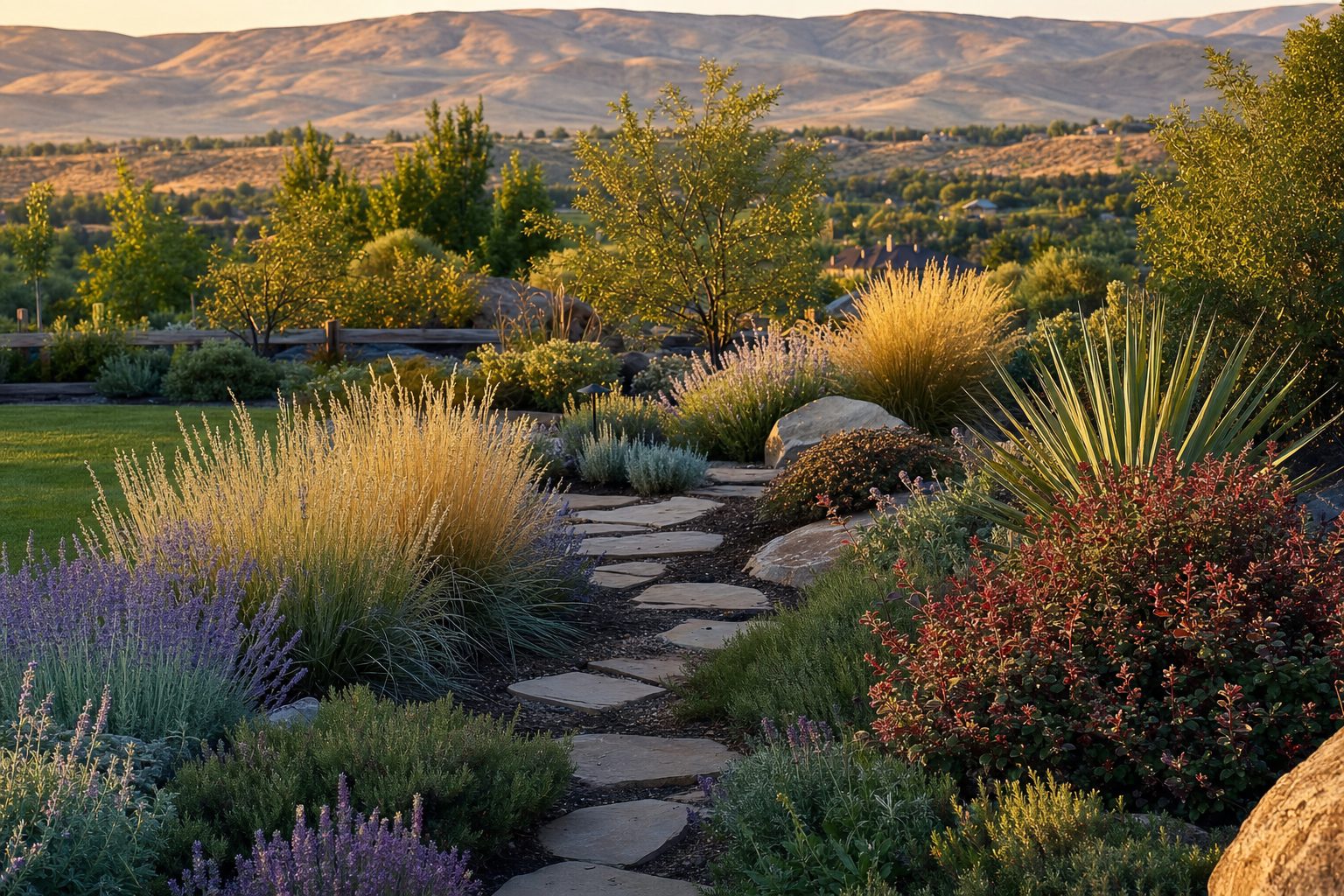
If you live in the Boise Foothills, near the Boise River Wildlife Management Area, or along the edges of Eagle, Star, or Hidden Springs, you know the drill: deer browse through yards at dawn and dusk, and what they do not eat, rabbits often finish. This guide features plants tested by Idaho Firewise at their Southern Idaho demonstration garden — species that hold up to real Treasure Valley deer and rabbit pressure while thriving in our alkaline soils, summer heat, and winter freeze-thaw cycles.
Why "deer-resistant" does not mean "deer-proof"
No plant is 100% deer-proof. A hungry deer in late summer when forage is scarce will eat almost anything, and young plants are always more vulnerable than established ones. The Idaho Firewise Test Garden in Southern Idaho has spent years evaluating which plants deer and rabbits consistently avoid — and the list below is drawn from that field testing, not generic national lists. The key insight: deer avoid plants with strong aromatic oils, fuzzy or leathery leaves, thorns, and milky sap. Rabbit resistance sometimes overlaps and sometimes does not.
Cage new plants for the first year. Even resistant species are vulnerable when newly planted and small. A simple wire cage or mesh tube for the first growing season lets roots establish. By year two, most plants are tough enough to stand on their own. This is especially important for Sedum, Sempervivum, Delosperma, Columbine, and Dianthus.
Understanding Treasure Valley deer pressure
The Treasure Valley sits at the intersection of deer winter range and suburban development. Mule deer (Odocoileus hemionus) descend from the Boise Foothills each fall and winter, browsing through neighborhoods in the North End, Foothills East, Columbia Village, Hidden Springs, and the Reserve. In spring and summer, does with fawns stay lower than the ridgeline and frequently move through yards near the greenbelt and along riparian corridors. White-tailed deer are less common but present along the Boise River corridor near Garden City and Eagle.
Rabbit pressure is valley-wide. Cottontail rabbits are active across Boise, Meridian, Nampa, and Caldwell year-round. They are particularly destructive in newly planted beds and will girdle young tree trunks in winter when other food is scarce.
If you live below the foothills — say, in downtown Boise, parts of Meridian, or central Nampa — deer are rarely an issue and you can plant without restriction. In the foothills and along the urban-wildland interface, the plant lists below will save you years of frustration.
Deer-resistant perennials for Treasure Valley yards
Perennials are the backbone of a deer-resistant landscape. The species below are tested for Southern Idaho conditions and return year after year without replanting.
| Plant | Sun | Deer & Rabbit Rating | Why it works |
|---|---|---|---|
| Russian Sage Perovskia atriplicifolia | Full sun | High | Aromatic oils repel deer and rabbits. Lavender-blue flowers July–frost. Drought-tolerant once established. 3–4 ft tall. |
| Catmint Nepeta × faassenii | Full sun | High | Mint-family oils make it unpalatable. Long bloom (May–September). 'Walker's Low' is the toughest cultivar for Idaho. 18–24 in. |
| Beardtongue Penstemon spp. | Full sun | High | Native Idaho penstemons (P. palmeri, P. strictus) are naturally deer-resistant. Tubular flowers attract hummingbirds. Excellent in dry, lean soil. |
| Yarrow Achillea millefolium | Full sun | High | Flat flower clusters, ferny aromatic foliage. Deer avoid the strong scent. 'Moonshine' and 'Paprika' cultivars thrive in Treasure Valley clay. 18–36 in. |
| Lavender Lavandula angustifolia | Full sun | High | Intense oil content. Needs excellent drainage — plant on berms or in gravel gardens. 'Hidcote' and 'Munstead' are hardy to Zone 5. 15–24 in. |
| Bearded Iris Iris germanica | Full sun | High | Rhizomes are slightly toxic and leathery leaves are unpalatable. Plant in August–September for spring bloom. Reblooming varieties ('Immortal', 'Feed Back') give a second show. |
| Red Hot Poker Kniphofia uvaria | Full sun | High | Tough, grassy foliage and torch-like flowers. Deer avoid the fibrous leaves. Blooms July–August. 3–4 ft tall — use as a vertical accent. |
| Globe Mallow Sphaeralcea ambigua | Full sun | High | Native to the intermountain West. Coral-orange flowers April–October. Deer rarely touch it. Extremely drought-tolerant — perfect for south-facing slopes. |
| Shasta Daisy Leucanthemum × superbum | Full sun, light shade | High | Classic white daisies. Deer dislike the slightly bitter foliage. 'Becky' is the most reliable cultivar for Idaho. 24–36 in. Divide every 3 years. |
| Cushion Spurge Euphorbia polychroma | Full sun, light shade | High | Milky latex sap deters all mammals. Chartreuse spring bracts turn red in fall. CAUTION: sap is a skin irritant — wear gloves when handling. |
| Columbine Aquilegia formosa | Part shade | Moderate | Idaho native. Deer-resistant once established but vulnerable when young — cage for the first year. Red-and-yellow flowers attract hummingbirds. Self-seeds gently. |
| False Indigo Baptisia australis | Full sun | High | Shrubby perennial with blue spires in May. Leathery foliage that deer avoid. Deep taproot makes it drought-tolerant and long-lived. 3–4 ft. |
Deer-resistant ground covers
Ground covers suppress weeds, reduce watering, and fill gaps between larger plants. The species below are low-growing and consistently rejected by deer and rabbits in Southern Idaho trials.
| Plant | Sun | Height | Notes |
|---|---|---|---|
| Snow-in-Summer Cerastium tomentosum | Full sun | 6–8 in | Silvery foliage and white flowers in May–June. Idaho-hardy, drought-tolerant. Spreads to fill gaps in rock gardens and borders. |
| Pussytoes Antennaria spp. | Full sun | 4–8 in | Native Idaho ground cover with fuzzy gray-green leaves. Deer avoid the texture. Pink-white spring flowers. Excellent between stepping stones. |
| Turkish Veronica Veronica liwanensis | Full sun, light shade | 1–2 in | Low mat-forming ground cover. 'Waterperry Blue' has tiny blue flowers in early spring. Tolerates foot traffic. |
| Lamb's Ears Stachys byzantina | Full sun to part shade | 6–12 in | Fuzzy silver leaves that deer and rabbits dislike. 'Helen von Stein' is non-blooming and stays tidy. Needs good drainage in winter. |
| Bugleweed Ajuga reptans | Part shade | 4–6 in | Deer avoid the slightly bitter foliage. 'Bronze Beauty' has dark purple leaves. Best in shaded beds under trees where grass will not grow. |
| Creeping Germander Teucrium aroanium | Full sun | 4–6 in | Oil content repels mammals. Pink flowers, gray-green leaves. Excellent rock garden plant for hot, dry slopes. |
| Desert Four O'Clock Mirabilis multiflora | Full sun to part shade | 12–18 in | Native to the Southwest. Magenta flowers open in late afternoon. Deer avoid it completely. Deep taproot — extremely drought-tolerant. |
Deer-resistant shrubs and small trees
Shrubs provide structure, privacy, and winter interest. For foothills properties, shrubs are especially valuable because they also serve as fire-resistant landscape buffers when chosen from non-oily species.
| Plant | Sun | Mature Size | Notes |
|---|---|---|---|
| Manzanita Arctostaphylos patula | Full sun | 3–6 ft | Evergreen with reddish bark. Low, slow growth. Some oil content but low fire risk due to habit. Tested and approved by Idaho Firewise. |
| Barberry Berberis thunbergii | Full sun | 3–6 ft | Thorns make it unapproachable. 'Crimson Pygmy' (2 ft) or 'Rose Glow' (5 ft). Non-invasive cultivars only — check the Idaho noxious weed list before buying. |
| Boxwood Buxus sempervirens | Part shade | 3–5 ft | Deer avoid the bitter foliage. 'Green Velvet' and 'Winter Gem' are hardy in Zone 6. Prune for formal hedges or leave natural. |
| Lilac Syringa vulgaris | Full sun | 8–12 ft | Idaho's state flower. Deer avoid the leaves. Fragrant May bloom. Plant from containers in spring or fall. Needs 6+ hours of sun for best bloom. |
| Oregon Grape Mahonia aquifolium | Full sun to part shade | 3–6 ft | Evergreen holly-like leaves. Yellow spring flowers, blue summer fruit. Deer avoid the spiny foliage. Idaho native — excellent for shaded foothills beds. |
| Cinquefoil Potentilla fruticosa | Full sun | 2–4 ft | Tough, long-blooming shrub (June–frost). Yellow, white, or pink flowers. Deer rarely browse it. 'Goldfinger' is the most reliable cultivar for Idaho. |
| Desert Willow Chilopsis linearis | Full sun | 10–15 ft | Small tree with trumpet flowers July–August. Deer avoid the narrow leaves. Needs excellent drainage — perfect for dry, hot sites. |
| Redbud Cercis canadensis | Full sun | 15–20 ft | Small tree with magenta spring flowers before leaf-out. Deer rarely bother it. 'Oklahoma' or 'Texas White' are heat-tolerant cultivars. Protect young trunks from rabbit girdling in winter. |
| Cotoneaster Cotoneaster spp. | Full sun to part shade | 2–6 ft | Low-spreading shrub. Deer avoid the tough leaves. Creeping cotoneaster (C. dammeri) is excellent on slopes and retaining walls. |
Deer-resistant bulbs for spring color
Bulbs are planted in fall (October–November, before the ground freezes) and emerge in early spring when deer are hungry after winter. The bulbs below contain compounds that deer find unpalatable, making them safe choices for foothills properties.
- Daffodils (Narcissus spp.) — toxic to deer and all mammals. The most reliable deer-proof bulb. Plant in October, 6 inches deep. Naturalizes and multiplies over years.
- Allium (Allium spp.) — ornamental onion. More rabbit-resistant than deer-resistant, but generally avoided. 'Globemaster' (3 ft) and 'Purple Sensation' (2 ft) are striking in May. Plant 4–6 inches deep in October.
- Fritillaria (Fritillaria meleagris) — checkered-lily for part shade. Deer avoid the musky scent. Plant in clusters of 5–7 bulbs. Best in moist, rich soil near the north side of shrubs.
- Snowdrops (Galanthus nivalis) — earliest spring bulb (February–March). Deer avoid the alkaloid content. Plant in drifts under deciduous trees. 4 inches deep in October.
- Crocus (Crocus spp.) — early spring color. Deer sometimes nibble, but usually leave them alone. 'Pickwick' and 'Flower Record' are reliable. Plant 3–4 inches deep.
Plants deer love — avoid these in foothills yards
Just as important as knowing what to plant is knowing what deer will destroy. The following are frequent casualties in Treasure Valley foothills neighborhoods:
| Plant | Deer preference | Deer-resistant alternative |
|---|---|---|
| Tulips (Tulipa) | Deer candy — flowers are eaten as soon as they open | Daffodils (Narcissus) or Allium |
| Hostas | Deer browse foliage to the ground | Bugleweed (Ajuga) or Brunnera for shade |
| Roses | Deer eat new growth, buds, and flowers | Barberry or Cinquefoil for similar shrub habit |
| Hydrangeas | Deer browse new shoots heavily in spring | Lilac or Oregon Grape |
| Apples & fruit trees (young) | Deer browse young branches and eat fallen fruit | Cage young trees; plant Redbud for ornamental small tree |
| Arborvitae | Deer strip branches to the trunk in winter | Boxwood or Juniper ('Spartan', 'Blue Point') |
| Pansies & Violas | Deer and rabbits both eat flowers and foliage | Nasturtium or Calendula (annuals, bitter foliage) |
Design strategies beyond plant selection
Plant choice is the first line of defense, but a layered approach works best in high-pressure areas. These strategies, tested in foothills neighborhoods from Hidden Springs to the Reserve, complement the plant lists above:
Layer the perimeter
Plant the most deer-resistant species along the outer edge of your property — Russian sage, barberry, yarrow, and yucca create a natural browsing barrier. Deer sample the outer row, find it unpalatable, and often move on before reaching more vulnerable plants in the interior.
Use height to your advantage
Deer browse from about chest height down. Plants that grow above 5 feet — lilac, desert willow, redbud — quickly grow beyond the browse zone. Their lower trunks may need protection for the first 2–3 years, but mature shrubs are safe.
Temporary fencing for new installations
No amount of plant selection protects a freshly installed landscape. New plants are tender, well-watered, and loaded with nutrients — exactly what deer seek. Use black deer netting on metal stakes around new beds for the first growing season. Remove it once plants establish in year two.
Repellents as a bridge, not a solution
Spray repellents (Liquid Fence, Plantskydd) work as a temporary bridge for new plants but wash off in rain and must be reapplied every 2–4 weeks. They are not a long-term strategy. Use them to get plants through the first growing season, then rely on plant selection.
Winter protection for tree trunks
Rabbits girdle young tree trunks in winter when snow covers other food. Wrap trunks with hardware cloth or white tree guards from November through March for the first 3–4 years. This is critical for redbud, fruit trees, and any young tree with thin bark.
Where to buy deer-resistant plants in the Treasure Valley
Most of the plants listed above are available at local independent nurseries. Big-box stores carry some, but the selection is inconsistent and stock is not always acclimated to Idaho conditions. For the best results, shop these local sources:
- Edwards Greenhouse & Flowershop — 4106 Sand Creek St, Boise. Family-owned since 1930. Carries drought-tolerant perennials including Russian sage, catmint, penstemon, and yarrow. Open year-round. (208) 342-7548.
- FarWest Garden Center — 5744 West State Street, Boise. Stocks deer-resistant shrubs (barberry, boxwood, lilac, potentilla) and a strong perennial selection. Staff can advise on foothills-specific planting. (208) 375-3550.
- Idaho Botanical Garden Plant Sale — annual spring sale (typically late April or early May). The best source for native Idaho species and locally grown deer-resistant plants. Members get early access. Arrive early — native penstemons and globe mallow sell out by mid-morning.
- Idaho Native Plant Society — Pahove Chapter Sale — held each spring at the MK Nature Center in Boise. The most reliable source of true Idaho natives, including pussytoes, globe mallow, and native penstemons. Sells out fast.
- High Country Gardens (mail order) — Santa Fe, NM-based nursery specializing in drought-tolerant, deer-resistant western natives. Their plants are grown for intermountain conditions and ship well to Idaho. Excellent source for globe mallow, desert four o'clock, and creeping germander if local nurseries are sold out.
A foothills deer-resistant landscape plan
If you are starting from scratch in a foothills neighborhood, here is a proven layout for a 1,000-square-foot front yard that combines deer resistance with fire-wise principles and Treasure Valley hardiness:
- Perimeter layer (outer 3 feet): Russian sage every 4 feet, interplanted with yarrow. Creates a fragrant barrier. Blooms July–frost.
- Mid-layer (3–8 feet from edge): Clumps of catmint, penstemon, and globe mallow. Group in drifts of 3–5 plants for visual impact.
- Accent layer (8–12 feet from edge): One lilac or Oregon grape for height and structure. One Red Hot Poker for vertical bloom.
- Ground cover between plants: Snow-in-Summer or Turkish Veronica. Fill gaps with pussytoes near paths.
- Bulb layer (under everything): 50 daffodil bulbs planted in October for early spring color before perennials emerge.
This plan uses roughly 40–50 plants, costs $300–600 in materials (from local nurseries), and establishes a deer-resistant landscape in two growing seasons. Water deeply once per week for the first summer, then taper to monthly in year two.
The Idaho Firewise Test Garden in Southern Idaho is an invaluable resource. Their staff evaluate plants specifically for our climate and wildlife pressure. Visit in summer to see mature deer-resistant plantings in person before you buy — it is the best way to understand mature plant sizes and how species combine in real landscapes. Their deer and rabbit resistant plant list is the source for this guide.