Native Plants for Treasure Valley Yards
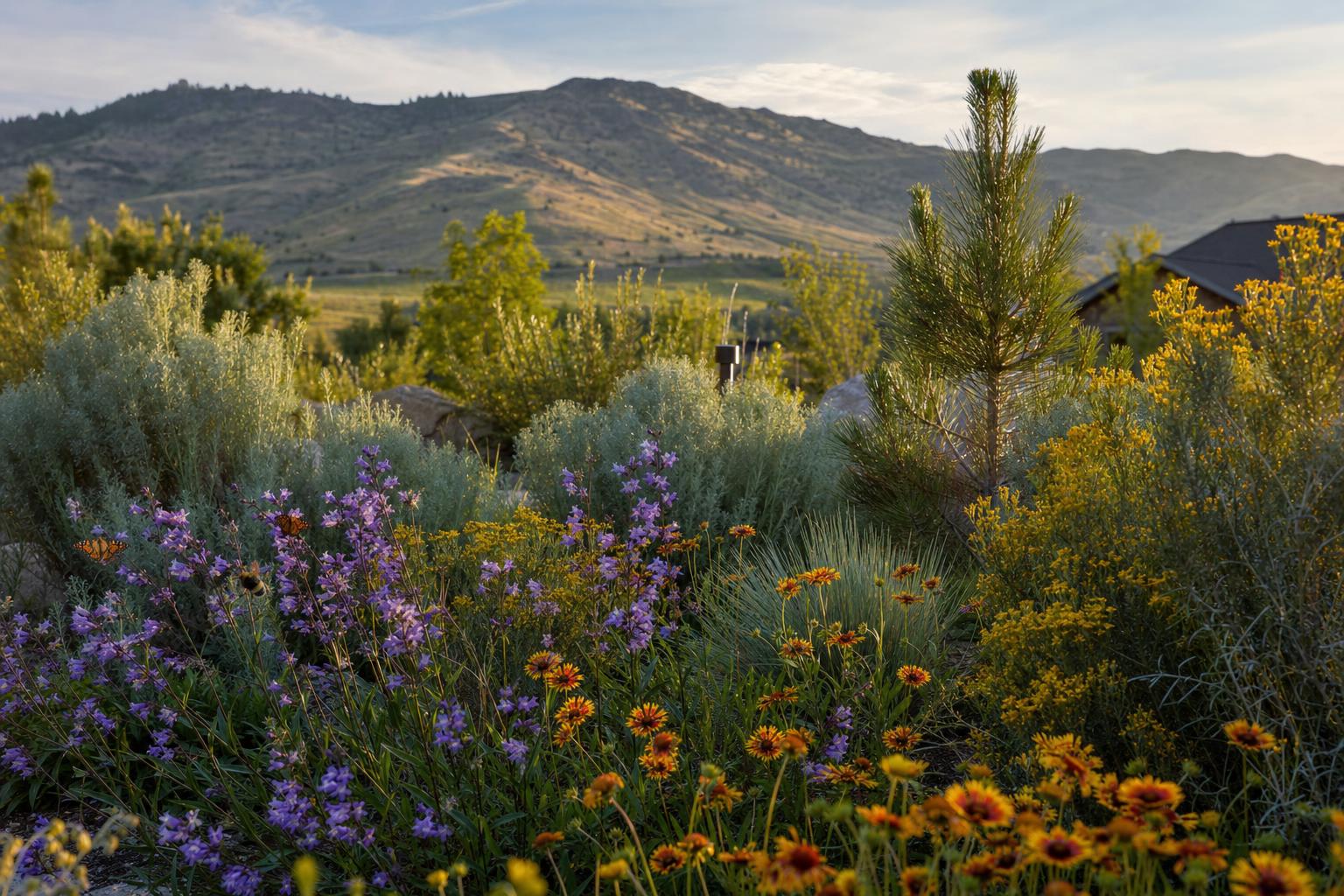
Native and climate-adapted plants help Treasure Valley yards become more resilient, lower-maintenance, and more supportive of pollinators. The goal is not to make every landscape look wild — it is to use plants that fit our high-desert climate and still create structure, color, and curb appeal.
The Treasure Valley sits at roughly 2,500 feet elevation in a semi-arid high-desert climate. We receive about 11 inches of precipitation annually, mostly between November and May. Summers are hot and dry with highs regularly above 95°F. Winters are relatively mild but can dip below zero during Arctic intrusions. Soils tend to be alkaline (pH 7.5–8.5) and range from silty loam to sandy-clay loam. Plants that thrive here are built for drought, alkaline soil, intense sun, and wide temperature swings.
Why choose natives?
Native plants are uniquely adapted to Idaho's arid conditions, alkaline soils, and harsh seasonal swings. Once established, they typically get the water they need from rainfall alone. They resist local pests and diseases, require fewer chemicals, and support local pollinators and wildlife — including hummingbirds, native bees, butterflies, and songbirds. For the homeowner, that means less watering, less fertilizing, and less fussing.
You don't have to go fully native. Even incorporating 30–40% natives into a traditional landscape reduces water use and maintenance while supporting biodiversity. The key is choosing the right plant for the right place.
Trees
| Tree | Sun | Water | Mature size | Why it works |
|---|---|---|---|---|
| Ponderosa Pine Pinus ponderosa | Full sun | Low | 60–100 ft | Deep roots, orange bark, drought champion. Iconic Idaho evergreen. |
| Western Hackberry Celtis reticulata | Full sun | Low | 20–30 ft | Tough shade tree with corky bark and bird-attracting berries. |
| Quaking Aspen Populus tremuloides | Sun/part shade | Medium | 20–50 ft | Iconic fluttering leaves, golden fall color. Best in groups with consistent moisture. |
| Rocky Mountain Juniper Juniperus scopulorum | Full sun | Low | 15–25 ft | Dense evergreen, blue-gray foliage, berry-like cones. Excellent screen or accent. |
| Serviceberry Amelanchier alnifolia | Sun/part shade | Low–Med | 10–20 ft | White spring flowers, edible berries, golden fall color. Multi-season star. |
Shrubs
| Shrub | Sun | Water | Mature size | Why it works |
|---|---|---|---|---|
| Russian Sage Perovskia atriplicifolia | Full sun | Low | 3–4 ft | Airy silver foliage, lavender-blue blooms all summer. Hummingbird magnet. |
| Blue Star Juniper Juniperus squamata | Full sun | Low | 2–3 ft | Silvery-blue evergreen, thrives in dry soils. Excellent groundcover texture. |
| Rabbitbrush Ericameria nauseosa | Full sun | Very low | 3–5 ft | Bright yellow fall flowers, silver foliage, extreme drought tolerance. Late pollinator food. |
| Antelope Bitterbrush Purshia tridentata | Full sun | Very low | 3–8 ft | Native to dry western slopes. Rose family. Supports wildlife. Thrives on little water. |
| Amber Jubilee Ninebark Physocarpus opulifolius | Sun/part shade | Low–Med | 5–7 ft | Orange-gold-green foliage, white blooms. Cold-hardy and drought-tolerant. |
| Snowberry Symphoricarpos alba | Sun/shade | Low–Med | 3–6 ft | White berries persist into winter. Wildlife food. Adaptable to shade. |
| Red Osier Dogwood Cornus sericea | Sun/part shade | Medium | 6–9 ft | Red winter stems, white spring flowers, fall fruit. Best in moist spots. |
| Woods' Rose Rosa woodsii | Full sun | Low | 3–6 ft | Wild rose with pink blooms and rose hips for birds. Superb adaptability. |
Ornamental Grasses
| Grass | Sun | Water | Mature size | Why it works |
|---|---|---|---|---|
| Karl Foerster Feather Reed Grass Calamagrostis acutiflora | Full sun | Low–Med | 4–5 ft | Tall, graceful, golden plumes. Drought-tolerant once established. Vertical accent. |
| Bluebunch Wheatgrass Pseudoroegneria spicata | Full sun | Very low | 2–4 ft | Most drought-resistant native bunchgrass. Roots reach 6+ feet deep. Supports wildlife. |
| Basin Wildrye Leymus cinereus | Full sun | Low | 3–5 ft | Tall native bunchgrass with blue-green foliage. Excellent for arid-zone texture. |
Perennials
| Perennial | Sun | Water | Bloom | Why it works |
|---|---|---|---|---|
| Blanket Flower Gaillardia aristata | Full sun | Low | Summer–Fall | Cheerful red-and-yellow daisy blooms all summer. Loves dry, hot spots. |
| Rocky Mountain Penstemon Penstemon strictus | Full sun | Low | Late Spring–Summer | Spikes of purple-blue flowers. Hummingbird favorite. Idaho native. |
| Yarrow Achillea millefolium | Full sun | Low | Summer | Ferny foliage, clusters of white-to-pink blooms. Loves dry, rocky soils. |
| Red Hot Poker Kniphofia uvaria | Full sun | Low–Med | Summer | Torch-like red-orange-yellow flowers. Attracts hummingbirds. Loves heat. |
| Lavender Lavandula angustifolia | Full sun | Low | Summer | Fragrant, silver foliage, purple blooms. Needs well-drained soil. Perfect in arid zones. |
| Catmint Nepeta faassenii | Full sun | Low | Spring–Fall | Long-blooming purple flowers, fragrant foliage. Drought-tolerant groundcover. |
| Showy Milkweed Asclepias speciosa | Full sun | Low–Med | Summer | Large pink blooms. Monarch butterfly host plant. Idaho native. |
| Arrowleaf Balsamroot Balsamorhiza sagittata | Full sun | Very low | Spring | Bright yellow sunflower-like blooms. Iconic Boise Foothills plant. |
Design tip: Layer your plantings. Use trees for structure and shade, shrubs for mid-height mass and texture, grasses for movement and winter interest, and perennials for color bursts. A typical bed might include a Ponderosa Pine as a focal point, a cluster of Russian Sage and Blue Star Juniper for mid-height, Karl Foerster grass for vertical accents, and Blanket Flower and Penstemon for foreground color.
Where to find native plants locally
Many local nurseries in the Treasure Valley carry native and drought-tolerant species. The Idaho Botanical Garden's Lewis and Clark Native Plant Garden is an excellent place to see mature natives in a landscape setting before you buy. The Ada Soil and Water Conservation District publishes water-wise gardening resources with locally specific plant lists. Look for native plant sales in spring — many sell out quickly as interest grows.
Planting tips for success
- Plant in fall or early spring — September–October or April–May. Cooler temperatures and natural moisture help roots establish before summer stress.
- Water deeply at planting — even drought-tolerant plants need regular water for their first growing season. Taper off in year two.
- Use the finger test — stick your finger 2 inches into the soil. If it's moist, skip watering. If it's dry, water deeply.
- Mulch with bark — 2–3 inches around plants (not against the crown) to retain moisture and regulate soil temperature.
- Don't amend soil for true natives — many natives prefer our alkaline, lean soils. Over-amending can make them grow weak and leggy.
- Provide wind protection — Treasure Valley afternoon winds can desiccate young plants. Temporary windbreaks or strategic placement help establishment.