Landscaping in Boise, Idaho
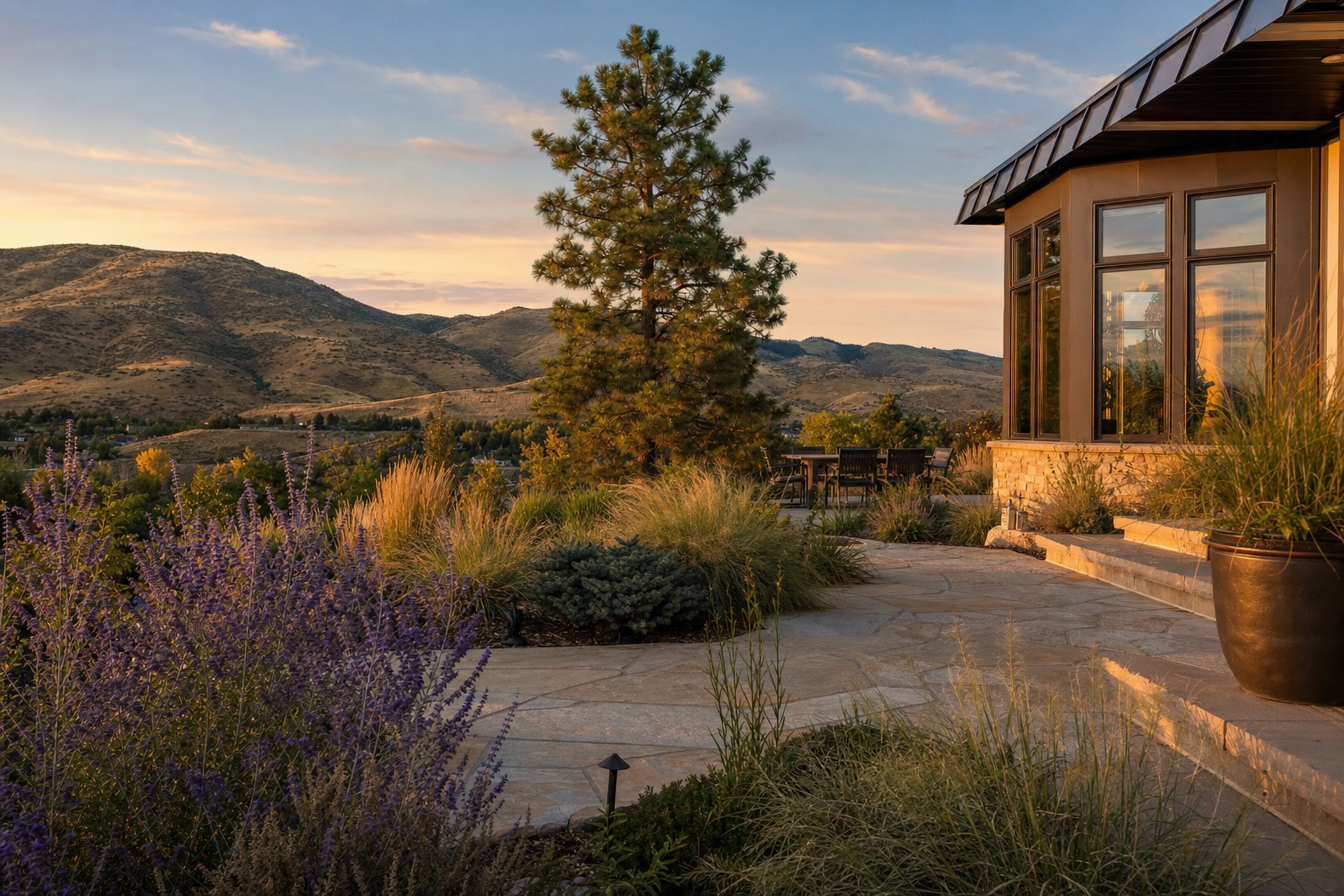
Boise is the largest city in the Treasure Valley and the center of Idaho's population growth. Its landscape runs from historic, tree-lined streets near downtown to sagebrush-covered foothills to newer master-planned communities along the Boise River. One landscaping approach does not fit all of Boise — the right design depends on your neighborhood, your soil, your irrigation access, and how you use your yard.
This guide breaks down Boise's landscaping conditions by area: climate and growing season, soil types, the unique pressure irrigation system, neighborhood-specific design guidance, plant recommendations tuned to each zone, and local resources for making it happen.
Boise's climate and growing season
Boise sits at 2,714 feet elevation in the Snake River plain. The 2023 USDA Plant Hardiness Zone Map places Boise in Zone 7a (0°F to 5°F average minimum), an update from the older 6b designation. This subtle shift matters: it expands the palette of marginally hardy plants that can survive Boise winters without protection.
Key climate facts for Boise:
- Average last spring frost: April 30 (30% probability, based on 1991–2020 NOAA normals)
- Average first fall frost: October 14
- Growing season: ~166 days
- Annual precipitation: ~11 inches, mostly November through May
- July average high: 93°F; record high 111°F
- January average low: 24°F; record low –25°F (1990)
- Elevation: 2,714 feet (Boise Air Terminal)
The practical takeaway: Boise's growing season is long enough for warm-season crops and most ornamentals, but the gap between the 30% probability frost date and the actual last frost can be two to three weeks in a cold year. NWS Boise has recorded frost as late as May 9. Plan tender plant installations for mid-May, and keep frost cloth handy through Mother's Day.
Soil types across Boise
Boise's soils vary dramatically by neighborhood, shaped by Boise River deposits, foothills geology, and agricultural history:
- North End & Downtown: Older alluvial soils — silty loam with good organic matter from decades of established trees. Generally well-drained but compacted in older lots.
- West Bench & Borah: Sandy loam over clay hardpan in places. Drains faster than the valley floor but may need organic amendment for water retention.
- Southeast Boise (Boise State area, Columbia Village): Silty loam with variable drainage. Some pockets of heavier clay near the Boise River corridor.
- Foothills & Harris Ranch: Rocky, well-drained soils over basalt. Alkaline (pH 7.5–8.5). Shallow in spots — digging can hit caliche or basalt. Excellent drainage but limited water retention. Native plants thrive here; amended beds are needed for conventional ornamentals.
- Northwest Boise & Glenwood: Mixed alluvial soils, generally sandy-silty loam with good drainage.
All Boise soils trend alkaline. If you want to grow acid-loving plants like blueberries, rhododendrons, or azaleas, plan for raised beds with acidified soil — not in-ground planting. Most Boise-native and adapted plants prefer or tolerate alkaline conditions.
Boise's irrigation system: a unique Treasure Valley resource
One of Boise's defining landscape features is its pressure irrigation system — a network of canals and laterals that diverts water from the Boise River to neighborhoods. This is separate from the drinking water system (operated by Veolia Water or Capitol Water Company) and provides inexpensive irrigation water from approximately mid-April through mid-October.
How Boise irrigation works:
- Water is diverted from the Boise River through major canals operated by irrigation districts like Settlers, New York, Boise Project Board of Control, and Nampa & Meridian Irrigation District.
- Older neighborhoods (North End, East End, parts of the Bench) typically have irrigation rights and lateral connections.
- Only subdivisions built in the last ~10 years are eligible to connect to the City of Boise's pressure irrigation system.
- Many newer subdivisions (post-2000) do not have irrigation access and rely on potable water for landscape irrigation — a significant cost factor.
- Even/odd watering day schedules apply in City-operated subdivisions to manage system capacity.
If you are buying a home or planning a landscape project in Boise, check your irrigation access early. A property with irrigation rights can water a large lawn or garden inexpensively during canal season. A property without it faces potable water rates for the same irrigation — which can double or triple summer water bills. Contact your irrigation district (the City of Boise website has a lookup tool) before finalizing a landscape design.
Neighborhood landscaping guide
Boise's neighborhoods have distinct characters, lot sizes, and landscape challenges. Here is how to approach the major areas:
The North End
Boise's oldest residential neighborhood, with tree-lined streets, historic homes, and Hyde Park's walkable core. Lots are narrow (typically 25–50 feet wide) with deep setbacks. Mature American elms, maples, and sycamores create a shaded canopy that defines the neighborhood's character.
- Design approach: Work with the existing tree canopy. Shade-tolerant perennials (hostas, ferns, brunnera, bleeding heart), woodland-style understory plantings, and small pocket patios.
- Challenges: Tree root competition for water and nutrients, limited sun in established yards, narrow side yards, and parking strip maintenance.
- Opportunities: The shade keeps plants cooler in summer. Front porch container gardens, cottage-style borders, and small lawn alternatives (creeping thyme, moss in deep shade) work well.
- Soil: Older alluvial silt loam with decades of leaf litter compost. Good organic matter but may be compacted near old foundations.
The Foothills (Hulls Gulch, Crane Creek, Highlands)
Hillside neighborhoods above the city with sweeping views, newer construction, and direct access to the Ridge to Rivers trail system. Lots range from 0.2 to 1+ acres. Soils are rocky, shallow, and alkaline — native sagebrush steppe habitat.
- Design approach: Embrace the native aesthetic. Sagebrush, rabbitbrush, native bunchgrasses (Bluebunch Wheatgrass, Basin Wildrye), boulder clusters, and decomposed granite paths. Low-water, fire-wise landscaping is both practical and beautiful here.
- Challenges: Rocky soil makes digging difficult (may need power equipment for planting). Deer are constant — they will browse anything palatable. Wildfire risk increases with elevation; maintain defensible space.
- Opportunities: Unmatched views, natural transitions from yard to open space, and a landscape that looks like it belongs. The foothills microclimate can be slightly warmer in winter (cold air drains downslope) but more exposed to wind.
- Plant picks: Ponderosa Pine, Serviceberry, Mountain Mahogany, Sagebrush, Rabbitbrush, Bitterbrush, Penstemon, Blanket Flower, Yarrow. All deer-resistant and fire-wise.
Harris Ranch & Barber Valley
A 1,300-acre master-planned community on Boise's east side, framed by the Boise River and the Foothills. Lot sizes average 11,750 square feet, with estate lots up to 20,400 square feet. The community emphasizes native landscaping and has design guidelines that encourage water-wise plantings.
- Design approach: River-adjacent landscapes with native transitions. The community's design guidelines favor xeriscaping, native plant palettes, and minimal turf. Work within these guidelines for a cohesive neighborhood aesthetic.
- Challenges: Deer pressure from the Foothills. Clay-heavy subsoils from river deposits. Some lots have high water tables near the Boise River corridor.
- Opportunities: Large lots allow for layered landscape design — patio zones, ornamental beds, native transitions at the edges, and space for large specimen trees. River proximity means potential for riparian-style plantings (willows, dogwoods, birches) in low, wet areas.
Southeast Boise (Columbia Village, Surprise Valley, Boise State area)
Suburban-feeling neighborhoods with larger lots than central Boise, traditional ranch-style homes, and good Greenbelt access. Silty loam soils with variable drainage.
- Design approach: Classic suburban landscape with Treasure Valley adaptations. Front yard xeriscape conversions, backyard patios with shade structures, and efficient sprinkler-to-drip conversions.
- Challenges: Full sun exposure on south-facing lots. Heavy summer heat without the tree canopy of the North End.
- Opportunities: Larger lots accommodate outdoor living zones — fire pits, patios, pergolas, and vegetable gardens. Good irrigation access in older parts of SE Boise.
West Bench & Borah
Mid-century neighborhoods on the bench above the valley floor, with established trees and a mix of original and renovated homes. Sandy loam soils over clay hardpan in places.
- Design approach: Mid-century modern landscape revival. Clean lines, drought-tolerant ornamental grasses, geometric patio layouts, and specimen trees (Japanese maple in protected spots, Serviceberry for native flair).
- Challenges: Some lots have clay hardpan 18–24 inches down, which can create perched water tables. Core aeration and soil amendment help. Bench exposure means more wind than valley floor.
- Opportunities: Established neighborhoods with mature shade trees. The bench's slightly higher elevation provides good drainage and a different microclimate than the valley floor.
Northwest Boise (Glenwood, Collister)
A mix of older homes, rural-residential lots, and newer infill along State Street. Close to the Boise River and the Foothills. Diverse soils — sandy-silty loam with good drainage.
- Design approach: Transitional landscapes blending rural and suburban character. Room for larger specimen trees, edible landscaping, and native plant corridors connecting to the river greenbelt.
- Challenges: Rapidly developing corridor — new construction alongside established properties means inconsistent streetscape character.
- Opportunities: Larger lots, river proximity, and easy access to FarWest Landscape's garden center on State Street for plant sourcing.
Recommended plants for Boise yards
Boise's Zone 7a climate, alkaline soils, and low precipitation favor plants adapted to high-desert conditions. Here are reliable performers organized by category:
| Plant | Latin name | Type | Sun | Water | Notes |
|---|---|---|---|---|---|
| Ponderosa Pine | Pinus ponderosa | Tree | Full sun | Low | Native to Boise Foothills; drought-tolerant once established |
| Serviceberry | Amelanchier alnifolia | Tree/shrub | Full sun to part shade | Low–moderate | Idaho native; edible berries; white spring flowers |
| Rocky Mountain Juniper | Juniperus scopulorum | Shrub | Full sun | Very low | Native; steel-blue foliage; extremely drought-hardy |
| Russian Sage | Perovskia atriplicifolia | Shrub | Full sun | Low | Silver foliage, lavender blooms July–September; Boise staple |
| Rabbitbrush | Chrysothamnus nauseosus | Shrub | Full sun | Very low | Native; golden fall flowers; thrives in foothills soils |
| Karl Foerster Grass | Calamagrostis × acutiflora | Grass | Full sun to part shade | Low–moderate | Vertical accent; golden plumes all winter; sterile (non-invasive) |
| Bluebunch Wheatgrass | Pseudoroegneria spicata | Grass | Full sun | Very low | Idaho state grass; native bunchgrass for foothills |
| Blanket Flower | Gaillardia aristata | Perennial | Full sun | Low | Native; red-orange daisy blooms May–September |
| Penstemon | Penstemon spp. | Perennial | Full sun | Low | Native; many varieties; hummingbird magnet |
| Yarrow | Achillea millefolium | Perennial | Full sun | Low | Native; fern-like foliage; flat flower clusters |
| Lavender | Lavandula angustifolia | Perennial | Full sun | Low | Loves Boise's dry heat and alkaline soil; needs excellent drainage |
| Catmint | Nepeta × faassenii | Perennial | Full sun | Low | Blue-purple flowers all summer; deer-resistant |
For a full plant list with bloom times and detailed growing notes, see our Native Plants for Treasure Valley Yards guide.
Boise landscaping costs
Boise landscape project costs are in line with national averages, with some regional variation. Here are realistic ranges for common projects:
- Front yard xeriscape conversion: $3,000–$12,000 depending on size, plant selection, and hardscape elements (boulders, gravel, pathways).
- Paver patio (300 sq ft): $3,600–$7,500 installed, including base preparation.
- Retaining wall (50 linear feet, 3 feet tall): $4,000–$8,000 for segmental block; $5,000–$10,000 for natural basalt boulder.
- Fire pit (gas, stone surround): $3,000–$7,000 installed.
- Sprinkler system (quarter-acre lot): $3,500–$6,000 for full installation.
- Sod installation: $1.50–$2.50 per square foot (sod + prep + installation).
- Full front yard landscape design + installation: $8,000–$25,000+ depending on scope.
For detailed pricing across all project types, see our Treasure Valley Landscaping Cost Guide.
Local resources for Boise landscaping
- FarWest Landscape — 7-acre garden center on State Street (Northwest Boise). The go-to local source for trees, shrubs, perennials, and landscape supplies. farwestlandscape.net · (208) 853-4057
- Idaho Botanical Garden — 50+ acres of demonstration gardens off Old Penitentiary Road. Free to visit; excellent for seeing mature specimens of plants that thrive in Boise's climate. idahobotanicalgarden.org
- Ada Soil & Water Conservation District — Free soil testing guidance and conservation resources for Ada County residents. adaswcd.org
- City of Boise Pressure Irrigation — Check your irrigation district, watering schedule, and system connection eligibility. cityofboise.org
- Boise Tree Canopy — The City of Boise offers a tree planting program for the public right-of-way (street trees). Contact Boise Parks & Recreation for details.
When to plant in Boise
March–April
Plant bare-root trees and shrubs. Direct sow cool-season crops (peas, lettuce, spinach). Start tomato and pepper seeds indoors. Prune fruit trees and dormant deciduous shrubs before bud break.
May
Safe to plant most perennials, trees, and shrubs after May 15. Wait until late May for tender annuals and warm-season vegetables. Harden off seedlings before transplanting.
June–July
Heat-loving plants go in the ground. Install drip irrigation. Mulch beds deeply (2–3 inches) to conserve moisture. Avoid planting new trees during the hottest weeks — wait for cooler fall weather.
August–September
Best time to plant trees and shrubs in Boise. Soil is warm, air temperatures moderate, and fall rains begin. Plants establish root systems before winter dormancy. Seed new lawns in early September.
October
Last call for tree and shrub planting. Plant spring-blooming bulbs (tulips, daffodils, alliums). Winterize irrigation systems before first hard freeze. Apply winter mulch to tender perennials.
November–February
Dormant pruning season for deciduous trees. Protect young trees from sunscorch with trunk wrap. Plan next year's projects. Avoid walking on frozen lawns.