Boise Xeriscaping Basics
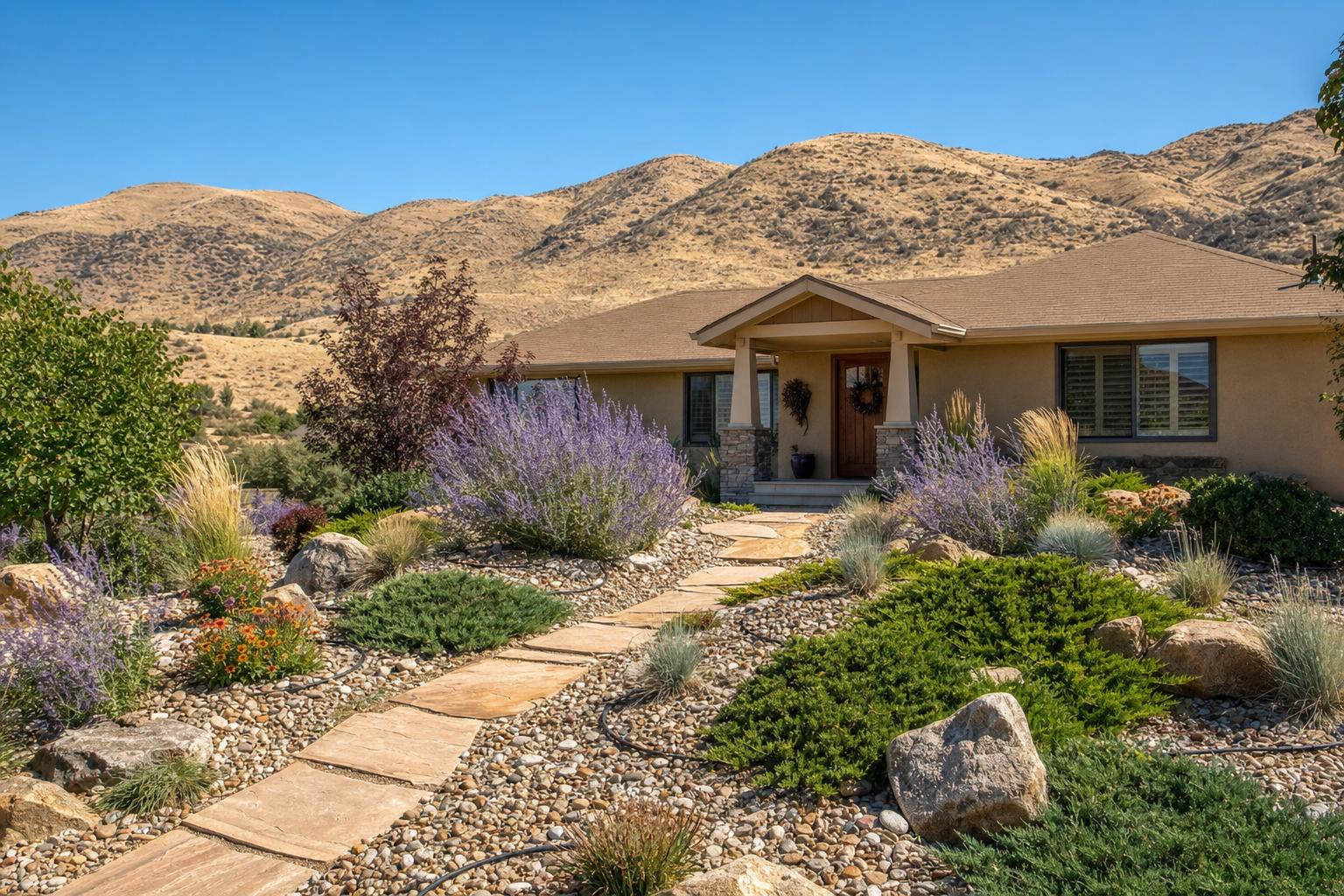
Xeriscaping in the Treasure Valley does not have to mean gravel, a few shrubs, and no personality. A well-designed water-wise yard uses zones — shade trees where they matter, efficient irrigation where plants need it, permeable hardscape, native or adapted plants, and mulch that protects soil from our intense summer heat.
The Treasure Valley receives about 11 inches of precipitation annually, with most of it falling between November and May. Our summers are hot and dry — July highs regularly exceed 95°F, and the record is 111°F. Soils here tend to be alkaline (pH 7.5–8.5), ranging from silty loam to sandy-clay loam, and they drain quickly. That means standard lawn-and-flower-bed landscapes depend heavily on irrigation to survive, and water costs are only going one direction.
The seven principles of xeriscaping
The term "xeriscape" was coined in Denver in 1981, but the principles are a perfect fit for the Treasure Valley's high-desert climate. Here's how each one applies locally:
1. Plan and design in zones
Think of your yard in three water-use zones:
- Oasis zone — near the house, patios, and entryways where you spend time. Moderate water, lush texture, shade trees, and color. This is where a small lawn or lush planting bed earns its keep.
- Transition zone — mid-yard areas. Low-to-moderate water using drought-tolerant shrubs, ornamental grasses, and hardy perennials.
- Arid zone — edges, corners, and side yards. Very low water using natives, boulders, gravel mulch, and drip-irrigated accent plants.
2. Evaluate and improve soil
Before planting, test your soil. Treasure Valley soils are typically alkaline and low in organic matter. Adding 2–3 inches of compost and working it into the top 6–8 inches improves water retention dramatically. For alkaline soils, incorporating sulfur or peat moss in specific beds can help acid-loving plants like blueberries or rhododendrons — though most natives thrive in alkaline conditions as-is.
3. Limit turf to functional areas
Keep lawn where people actually use it — play areas, pet zones, or a small gathering spot. Replace low-use strips (park strips, side yards, hot corners) with planting beds, boulders, pathways, ornamental grasses, and drought-tolerant flowering plants. Even a 30% reduction in lawn area can cut outdoor water use by 40–50%.
Kentucky Bluegrass remains a good choice for functional lawns in the Treasure Valley. It has good drought tolerance and self-repairs once established. The key is watering deeply (1–1.5 inches per week in summer) rather than daily shallow sprinkling.
4. Choose the right plants
Group plants by water needs — this is called hydrozoning. Don't mix a water-loving hydrangea with a drought-tolerant Russian sage in the same bed; one will suffer no matter what you do. Cluster drought-tolerant plants together so they can share the same low-water regime. Same with sun and shade preferences.
Local insight: A few dramatic, low-maintenance plants can make a bigger impact than a crowded bed of thirsty annuals. A mature Russian Sage in full bloom, backed by Blue Star Juniper and Karl Foerster grass, gives you silver-blue, deep green, and golden plumes — zero deadheading, minimal water, and winter interest.
Some of the best water-wise plants for Treasure Valley yards include:
- Trees: Ponderosa Pine, Western Hackberry, Serviceberry, Rocky Mountain Juniper
- Shrubs: Russian Sage, Blue Star Juniper, Rabbitbrush, Ninebark, Sagebrush, Snowberry
- Grasses: Karl Foerster Feather Reed Grass, Bluebunch Wheatgrass, Basin Wildrye
- Perennials: Blanket Flower, Penstemon, Yarrow, Moonshine Yarrow, Red Hot Poker, Lavender, Catmint
For a full plant list with sun, water, and bloom details, see our Native Plants for Treasure Valley Yards guide.
5. Install efficient irrigation
Older spray-head systems lose significant water to evaporation and wind drift — a real problem during our breezy afternoons. Upgrades that make the biggest difference:
- MP rotator nozzles — retrofit existing pop-up heads with rotating stream nozzles. They apply water more slowly and in larger droplets, reducing evaporation and runoff.
- Drip irrigation — for all planting beds, drip lines deliver water directly to root zones. No overspray, no drift, no wasted water on paths.
- Smart controller with weather sensor — adjusts watering based on real-time local conditions. Skip watering after rain. Reduce run times when temperatures drop.
- Rain barrels — capture water from downspouts for use in nearby beds. Even in our dry climate, spring and fall storms can fill barrels surprisingly fast.
6. Mulch heavily
Mulch is the cheapest water-saving investment you can make. A 3-inch layer of bark mulch holds moisture in the soil, moderates soil temperature, and suppresses weeds. Bark mulch outperforms decorative rock for moisture retention because it breaks down over time, adding organic matter and improving soil structure. Rock mulch works well in arid zones but absorbs and radiates heat — fine for desert-adapted plants, tough on anything that prefers cooler roots.
7. Maintain properly
Xeriscapes are low-maintenance, not zero-maintenance. Annual tasks include refreshing mulch (add 1–2 inches each spring), checking drip emitters for clogs, pruning dead wood in late winter, and dividing perennials every 3–5 years. Weeds are easier to control because drip irrigation waters only the plants you want — not the spaces between them.
What does it cost?
Xeriscape conversions are not necessarily cheaper than traditional landscaping up front. Boulders, decorative rock, and quality drought-tolerant plants can cost as much as sod and sprinklers. The savings show up over time through lower water bills and reduced maintenance. Rough ranges for a typical front yard (800–1,200 sq ft):
| Project type | Approximate cost range | What's involved |
|---|---|---|
| Professional full xeriscape conversion | $8–15 per sq ft | Lawn removal, soil prep, plants, boulders, drip irrigation, mulch |
| DIY conversion | $2–5 per sq ft | Materials only: plants, mulch, drip kit, rented equipment |
| Hybrid approach | $4–8 per sq ft | Keep small lawn, convert edges and park strip to xeriscape |
| Irrigation upgrade only | $500–2,000 | MP rotator nozzles, smart controller, drip lines for beds |
Costs vary widely based on plant sizes, boulder selection, hardscape elements, and contractor rates. These ranges reflect Treasure Valley market conditions as of 2026.
Common mistakes to avoid
- Going all-gravel. A yard that's 100% rock and gravel looks barren, absorbs heat, and offers no habitat. Mix in plants for life, texture, and color.
- Ignoring drainage. Even xeriscapes need to handle stormwater. Grade away from the foundation and use permeable surfaces so water doesn't pool.
- Planting too close together. Drought-tolerant shrubs and grasses grow larger than people expect. Space for mature size, even if it looks sparse initially.
- Mixing water needs. Don't plant a thirsty hydrangea next to a dry-loving lavender. One will drown or the other will fry.
- Skip the design plan. A professional design — even a simple one — saves money by preventing impulse plant purchases and poor spacing decisions.
Getting started
If you're not ready for a full conversion, start with one zone. Convert your park strip to drip-irrigated natives. Replace a hot south-facing bed with Russian Sage and ornamental grasses. Add a smart controller to your existing sprinkler system. Each step reduces water use and builds momentum.
The best time to plant in the Treasure Valley is early fall (September–October) or early spring (April–May). Cooler temperatures and natural moisture help roots establish before summer heat arrives.